Define the Role, Scope, and Success Criteria Before You Search
Hiring a remote freelancer works best when you know exactly what you need before you start reviewing profiles or posting a project. A clear brief helps qualified freelancers decide whether they are a good fit, reduces misunderstandings, and gives both sides a practical reference point once the work begins.
Start by identifying the business problem behind the project. Instead of saying, “We need a designer,” define the outcome: “We need a landing page design for a new product launch that matches our existing brand guidelines and supports paid ad traffic.” This gives freelancers context, not just a task list.
Next, outline the scope of work. Scope should explain what the freelancer is expected to do and, just as importantly, what is not included. For example, a content writer may be responsible for drafting a blog post, but not for keyword research, image sourcing, uploading to a CMS, or creating social media captions unless those tasks are clearly included.
A strong freelance brief usually includes:
- Project goal: What the work should accomplish.
- Deliverables: The specific files, assets, documents, or outcomes expected.
- Timeline: Key dates, milestones, and final deadline.
- Required skills: Tools, platforms, industry knowledge, or technical abilities needed.
- Brand or company context: Guidelines, examples, audience details, and tone of voice.
- Communication expectations: Preferred channels, meeting cadence, and response-time norms.
- Review process: Who gives feedback, how many review rounds are expected, and how revisions will be handled.
- Success criteria: How you will evaluate whether the work meets expectations.
Success criteria are especially important for remote freelance work because the freelancer may not have the same informal context that an internal team member has. Be specific enough to guide decision-making. For example, “write a high-quality article” is subjective. A clearer version would be: “write a 1,500-word educational article for small business owners, using a clear U.S. English tone, practical examples, and a structure that matches our editorial guidelines.”
You do not need to overcomplicate the brief, but you should make it complete enough that a freelancer can estimate the work accurately. If the project is still unclear, consider starting with a smaller discovery task, consultation, or paid test project before committing to a larger engagement.
The goal is not to control every detail. It is to create shared expectations. When the scope, deliverables, timeline, and definition of success are clear from the start, you are more likely to attract relevant freelancers, receive accurate proposals, and build a smoother remote working relationship.
Find and Vet Remote Freelancers Effectively

Once your project scope is clear, the next step is finding freelancers who can actually deliver the work—not just people with attractive profiles or polished pitches. Remote hiring gives you access to a wider talent pool, but it also requires a more deliberate vetting process because you may never meet the person face to face.
Start by choosing the right sourcing channel for the type of work you need. Freelance marketplaces can be useful for comparing profiles, portfolios, and client reviews in one place. Professional networks may be better for referrals, specialized expertise, or long-term collaboration. Niche communities, industry groups, and portfolio sites can also help you find freelancers with specific skills, such as UX design, technical writing, video editing, bookkeeping, or software development.
When reviewing candidates, look beyond star ratings or short testimonials. A strong freelancer should be able to show relevant work samples, explain their process, and demonstrate how their work solved a real problem for a client or project. For example, a marketing freelancer’s portfolio should not only show finished assets; it should also help you understand the audience, goal, strategy, and results where appropriate.
A practical vetting process may include:
- Reviewing the portfolio for relevance: Look for work that matches your project type, industry, audience, or complexity level. A beautiful portfolio is helpful, but relevant experience is more important than visual polish alone.
- Checking communication quality early: Pay attention to how clearly the freelancer answers questions, asks for context, and explains next steps. Remote work depends heavily on written communication, so early messages can reveal a lot.
- Asking about process and availability: A reliable freelancer should be able to describe how they manage deadlines, gather information, handle feedback, and communicate progress.
- Looking for signs of professional judgment: Experienced freelancers often ask thoughtful questions before giving a firm estimate. This is usually a positive sign because it shows they are trying to understand the project instead of guessing.
- Using a small paid test project when appropriate: For larger or ongoing engagements, a short paid assignment can help you evaluate work quality, responsiveness, and fit before committing to a bigger scope.
Our editorial team recommends treating vetting as a two-way evaluation. You are deciding whether the freelancer is right for the project, but the freelancer is also deciding whether your scope, timeline, and communication style are workable. The best remote collaborations usually begin with mutual clarity and realistic expectations.
Watch for potential red flags, such as vague answers, reluctance to share relevant samples, poor follow-through, missed calls without explanation, or proposals that ignore your stated requirements. None of these signs automatically prove a freelancer will be a poor fit, but they are reasons to slow down, ask better questions, or compare additional candidates.
The goal is not to find the cheapest or fastest option. It is to find a freelancer whose skills, process, communication style, and availability match the work you need done. A careful vetting process takes more time upfront, but it can prevent delays, confusion, and mismatched expectations later.
Interview Freelancers for Remote Fit, Not Just Technical Skill
A freelancer’s portfolio can show what they are capable of, but the interview helps you understand how they work. This is especially important when hiring remotely. You are not only evaluating skill; you are also looking for clear communication, reliable follow-through, realistic planning, and the ability to work independently with limited supervision.
Start the conversation by explaining the project goal, timeline, and expected deliverables. Then invite the freelancer to respond with questions or concerns. Experienced freelancers often ask about audience, priorities, access to materials, approval steps, and how feedback will be handled. Their questions can reveal how carefully they think through a project before accepting it.
A useful remote freelance interview should cover several areas:
| What to Evaluate | Helpful Interview Questions |
|---|---|
| Relevant experience | “Have you worked on projects similar to this? What made them successful or challenging?” |
| Process | “How do you usually move from kickoff to final delivery?” |
| Communication style | “How do you prefer to share updates, ask questions, and handle feedback?” |
| Availability | “What is your current workload, and when could you realistically begin?” |
| Timezone overlap | “Are there specific hours when you are usually available for meetings or quick responses?” |
| Revision approach | “How do you manage feedback rounds and changes in direction?” |
| Tools and workflow | “Which tools do you typically use for project management, file sharing, or collaboration?” |
| Problem-solving | “Can you describe a time when a project changed unexpectedly and how you handled it?” |
Pay close attention to how the freelancer explains their process. A strong answer does not need to be complicated, but it should be clear. For example, a designer might describe a workflow that includes discovery, mood boards, first concepts, revision rounds, and final file delivery. A developer might walk through requirements review, technical planning, implementation, testing, and handoff documentation. These details show whether the freelancer has a repeatable way to manage work.
Remote fit also depends on communication expectations. Some freelancers work best with async updates through email or project management tools, while others prefer scheduled check-ins. Neither approach is automatically better. What matters is whether their working style matches the needs of your project. If your timeline requires fast decisions, make sure the freelancer can support that pace before the project begins.
It is also useful to ask how they handle unclear instructions or missing information. A dependable remote freelancer should be comfortable asking clarifying questions instead of making risky assumptions. This matters because remote projects often involve fewer informal conversations than in-office work.
Before ending the interview, summarize the next steps. Confirm the expected deliverables, estimated timeline, communication method, and any materials the freelancer would need to begin. This gives both sides a chance to correct misunderstandings early.
The best interviews feel less like a test and more like a working conversation. By the end, you should have a clearer sense of the freelancer’s skill, judgment, availability, and collaboration style. That combination is what helps turn a remote hire into a productive working relationship.
Use Contracts That Clearly Define the Working Relationship

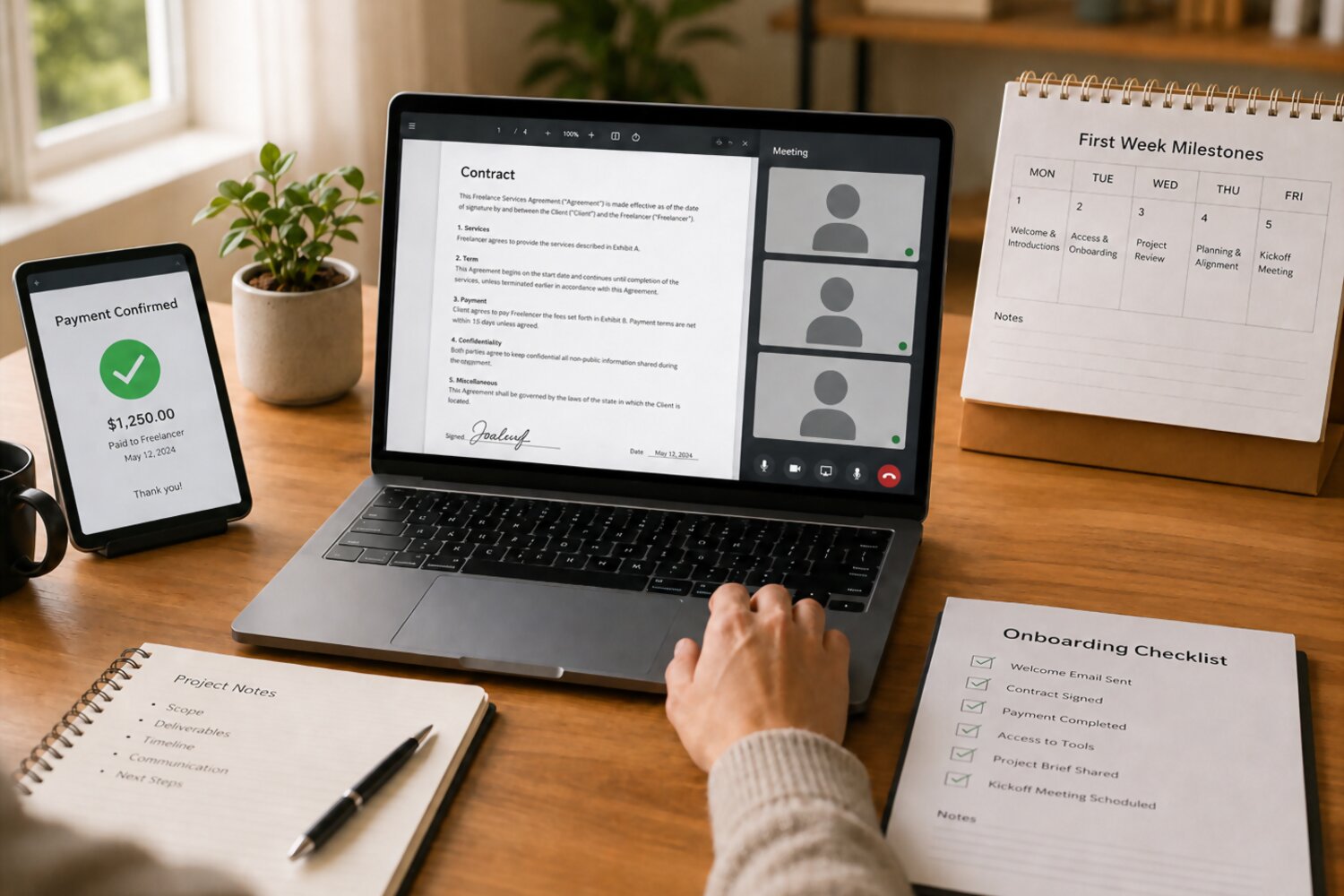
A clear contract is one of the most important tools for managing a remote freelance engagement. It gives both sides a shared reference for what is being done, when it is due, how payment works, and what happens if the project changes. Even when the relationship feels informal, written terms can help prevent confusion later.
A freelance contract does not need to be overly complicated, but it should be specific. The goal is to document the working arrangement in plain language so the client and freelancer understand their responsibilities before work begins.
What a Freelancer Contract Should Usually Cover
A strong agreement often includes the following elements:
- Scope of work: Describe the services the freelancer will provide. Be clear about what is included and what is outside the project.
- Deliverables: List the specific items the freelancer will submit, such as files, drafts, designs, reports, code, or completed assets.
- Timeline and milestones: Include start dates, review points, and final delivery dates when possible.
- Fees and payment terms: State the agreed rate or project fee, when invoices are due, and whether payments are tied to milestones.
- Revision process: Clarify how many revision rounds are included and how additional changes will be handled.
- Client responsibilities: Note what the client must provide, such as brand guidelines, access credentials, feedback, approvals, or source materials.
- Confidentiality: Address how private business information, customer data, internal documents, or unreleased work should be handled.
- Intellectual property and usage rights: Explain who owns the final work and when ownership or usage rights transfer.
- Termination process: Describe how either side can end the engagement and how completed work or unpaid invoices will be handled.
- Communication expectations: Include preferred channels, meeting cadence, and expected response times if they are important to the project.
Make the Scope Easy to Understand
Scope is where many freelance projects become unclear. A vague statement like “create marketing content” can mean different things to different people. A more useful version would be: “write four 1,000-word blog posts on approved topics, including one outline and up to two revision rounds per post.”
The more specific the scope, the easier it is to estimate time, manage feedback, and identify when a request falls outside the original agreement. This does not mean every detail must be fixed forever. It simply means changes should be discussed and documented before they affect the timeline, fee, or deliverables.
Avoid Treating the Contract as a Formality
Remote freelance work often moves quickly, especially when teams hire for urgent support. Still, skipping the contract or relying only on scattered email messages can create unnecessary risk. A written agreement helps the freelancer understand expectations and helps the client manage the project consistently.
Before signing, both sides should have time to review the terms and ask questions. For complex projects, sensitive information, international work arrangements, or questions about worker classification, taxes, or legal obligations, it is wise to consult a qualified professional. This section is for general educational purposes and should not be treated as legal advice.
A good contract does not replace trust. It supports trust by making the working relationship clear, professional, and easier to manage from the start.
Set Up Secure and Predictable Freelancer Payments
Payment terms should be clear before a freelancer starts work. Remote projects often involve people in different cities, states, or countries, so both sides need to understand how much will be paid, when payment is due, what triggers payment, and which payment method will be used. Clear payment expectations help protect the working relationship and reduce avoidable disputes.
Start by choosing a payment structure that matches the type of project. There is no single “best” model for every freelance engagement. The right approach depends on the scope, timeline, level of uncertainty, and how easy the work is to define.
Common payment structures include:
- Fixed-fee projects: Best for clearly defined work, such as designing a logo package, writing a set number of articles, or building a specific landing page.
- Milestone-based payments: Useful for larger projects with stages, such as strategy, draft, revision, and final delivery.
- Hourly billing: Often used when the scope may change or the work requires ongoing support, troubleshooting, or consulting.
- Retainers: Appropriate for recurring work, such as monthly content support, design updates, bookkeeping, or technical maintenance.
For example, a company hiring a freelance web designer for a homepage redesign might use milestone payments: one payment after the initial wireframe, another after the first visual design, and the final payment after approved file delivery. A business hiring a virtual assistant for weekly administrative support may prefer hourly billing or a monthly retainer with clearly defined tasks and expected availability.
Put Payment Details in Writing
Payment terms should be included in the contract or written agreement. At minimum, define:
- Total project fee or billing rate
- Invoice schedule
- Payment due date after invoice submission
- Accepted payment methods
- Milestones or approval steps tied to payment
- Currency used for payment
- Any platform, transfer, or processing fees and who is responsible for them
- What happens if the project is paused, canceled, or expanded
Avoid relying on casual statements like “we’ll pay when it’s done.” A better approach is: “The freelancer will invoice 50% at project kickoff and 50% after delivery of the approved final files, with payment due within 15 days of each invoice.” The exact terms may vary, but the wording should be specific enough that both sides understand the process.
Choose Reliable Payment Tools
Use reputable payment methods that provide records of invoices, payments, and transaction dates. Depending on the project and location of the freelancer, this might include a freelance marketplace payment system, bank transfer, business payment platform, or invoicing software. For international freelancers, confirm currency, transfer fees, and expected processing times in advance.
It is also wise to keep payment records organized. Save contracts, invoices, receipts, tax forms when applicable, and written approvals. These records can help with bookkeeping, project tracking, and future planning.
Connect Payment to Clear Deliverables
One of the most practical ways to manage freelance payments is to connect them to defined deliverables or milestones. This keeps the project moving and gives both sides a fair checkpoint. The client can review progress before releasing the next payment, while the freelancer has a predictable schedule for compensation.
For larger projects, avoid holding all payment until the very end. A milestone structure can reduce risk for both parties and create natural opportunities to review the work, adjust priorities, or clarify feedback. For smaller projects, a deposit plus final payment may be enough.
Predictable payments are part of professional remote hiring. When freelancers know when and how they will be paid, they can plan their work more confidently. When clients document payment terms clearly, they can manage budgets, approvals, and project expectations with fewer surprises.
Onboard Freelancers With the Right Access, Context, and Tools
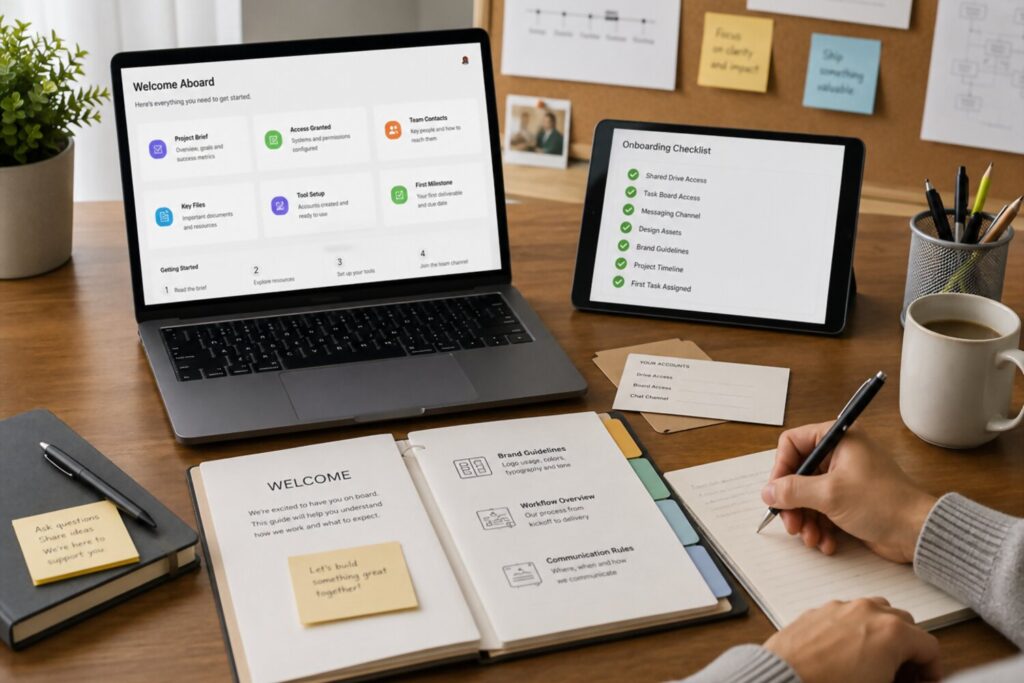
A strong onboarding process helps remote freelancers start productively instead of spending their first days guessing where files are, who approves work, or how decisions are made. Even experienced freelancers need context. They may understand their craft, but they still need to understand your business, audience, priorities, and workflow.
Think of onboarding as a practical handoff. The goal is to give the freelancer enough information to do the work well without overwhelming them with every internal document your team has. Start with the essentials: what the project is, why it matters, what success looks like, who is involved, and where the freelancer should go for questions.
A useful remote freelancer onboarding checklist may include:
- Project overview: The goal, expected outcome, target audience, and business context.
- Key contacts: The main point of contact, decision-maker, and anyone else involved in reviews or approvals.
- Communication channels: Email, Slack, Teams, project management software, or another agreed tool.
- Meeting expectations: Kickoff call, recurring check-ins, milestone reviews, or async updates.
- File access: Shared folders, brand assets, templates, source materials, examples, and previous work.
- Tool access: CMS, design software, analytics dashboards, development environments, or collaboration platforms when needed.
- Guidelines and standards: Brand voice, design rules, editorial requirements, coding standards, formatting preferences, or quality expectations.
- Timeline and milestones: Important dates, review windows, approval steps, and final delivery deadline.
- Security expectations: How to handle confidential information, passwords, customer data, or internal documents.
Be thoughtful about access. Freelancers should receive the tools and information they need to complete the project, but they do not need unlimited access to your systems. Use role-based permissions when available, share only necessary files, and avoid sending passwords through unsecured channels. When the project ends, remove access to systems, shared folders, and communication channels that are no longer needed.
A kickoff call can be especially helpful for remote projects. Use it to walk through the brief, confirm deliverables, explain priorities, and answer questions. This does not need to be a long meeting. In many cases, 20 to 30 minutes is enough to align on expectations and prevent early confusion.
It is also helpful to create a simple “start here” document. This can include the project summary, links to key resources, contact information, deadlines, and the review process. Keeping this information in one place makes it easier for the freelancer to work independently and reduces repeated questions.
Good onboarding is not about adding bureaucracy. It is about removing friction. When freelancers have the right context, access, and communication structure from the beginning, they can spend less time searching for information and more time delivering useful work.
Manage the First 30 Days and Build a Reliable Working Relationship
Hiring a freelancer remotely does not end once the contract is signed and access is granted. The first few weeks are where expectations become working habits. This period is your opportunity to confirm that the freelancer understands the project, communicates clearly, meets agreed milestones, and can collaborate well with your team.
Start with a clear kickoff. Review the project goal, deliverables, timeline, communication channels, and decision-making process. Even if these details were already discussed during hiring, repeating them at the start of the engagement helps both sides align before the real work begins.
During the first 30 days, focus on visibility, feedback, and momentum. Remote work can become frustrating when people are unsure about progress or priorities. You do not need to micromanage, but you should create simple checkpoints so everyone knows whether the project is on track.
A practical first-month management plan may include:
- Set an early milestone
Ask for an outline, draft, wireframe, sample, technical plan, or first deliverable before too much work is completed. Early review helps catch misunderstandings while they are still easy to fix. - Give specific feedback
Instead of saying, “This needs improvement,” explain what should change and why. For example: “Please make the introduction more practical for small business owners and reduce the technical language in the second paragraph.” - Track decisions in writing
Keep important approvals, scope changes, deadlines, and feedback in a shared tool or email thread. Written records reduce confusion, especially when multiple people are involved. - Respect the agreed workflow
If the freelancer was hired for independent project work, avoid adding last-minute meetings, unclear requests, or urgent changes unless they are necessary and discussed clearly. - Review communication quality
Pay attention to whether the freelancer asks useful questions, flags blockers early, and responds within agreed expectations. Communication habits often matter as much as technical skill in remote freelance work.
Our editorial team recommends scheduling a brief check-in after the first major milestone. This does not need to be formal. A short conversation or written review can answer three important questions: What is working well? What needs clarification? What should change before the next phase?
It is also important to handle problems professionally. If a deadline is missed, feedback is misunderstood, or the scope begins to expand, address it directly and calmly. Refer back to the original agreement, clarify the issue, and decide whether the timeline, deliverables, or process need to be adjusted. Avoid assuming bad intent when the issue may be caused by unclear instructions, delayed approvals, or changing priorities.
At the end of the first 30 days, evaluate the relationship based on the full experience—not just one deliverable. Consider the quality of the work, reliability, communication, responsiveness to feedback, and overall fit with your team’s workflow. If the collaboration is working well, you may decide to continue with a larger project, recurring work, or a longer-term freelance arrangement. If it is not the right fit, document the handoff, settle any outstanding approved work according to the agreement, and close the engagement respectfully.
A strong freelance relationship is built through clarity, consistency, and mutual professionalism. When clients provide useful direction and freelancers communicate progress openly, remote work becomes easier to manage and more likely to produce dependable results.
Common Mistakes To Avoid
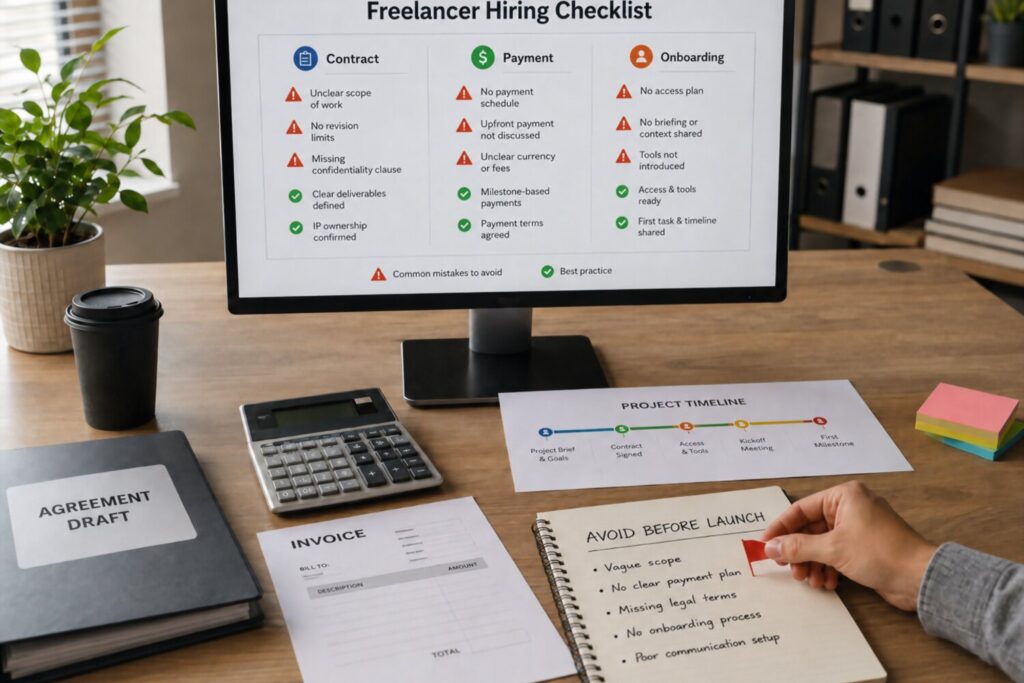
Hiring freelancers remotely can be efficient and flexible, but only when the process is structured. Many problems do not come from a lack of talent; they come from unclear expectations, rushed decisions, weak documentation, or poor communication. Avoiding these common mistakes can help you create a smoother freelance engagement from the first conversation to final delivery.
1. Starting Without a Clear Scope
One of the biggest mistakes is hiring before the project is clearly defined. If the freelancer does not know the expected deliverables, timeline, audience, tools, or success criteria, they may estimate inaccurately or deliver work that misses the mark.
Before hiring, create a short project brief that explains:
- What needs to be done
- Why the work matters
- What the final deliverables should include
- What is outside the scope
- Who will review and approve the work
- What deadlines or milestones apply
A clear scope does not remove every uncertainty, but it gives both sides a reliable starting point.
2. Choosing Based Only on Price
Low cost can be appealing, especially for small businesses or first-time clients, but price should not be the only factor. A freelancer’s process, communication style, reliability, relevant experience, and ability to understand the assignment are also important.
A better approach is to compare proposals based on fit. Look at the freelancer’s portfolio, questions, timeline, work samples, and understanding of the project. The strongest proposal is often the one that shows thoughtful judgment, not just the lowest number.
3. Skipping the Written Agreement
Even simple freelance projects benefit from written terms. Without a contract, statement of work, or documented agreement, both sides may remember the scope, payment timing, revision process, or ownership expectations differently.
At minimum, document the deliverables, payment terms, deadlines, feedback process, confidentiality expectations, and how changes will be handled. For complex or sensitive engagements, consult a qualified professional instead of relying on informal templates or assumptions.
4. Giving Too Much or Too Little Access
Remote freelancers need the right information to do the job, but they do not need unrestricted access to every system. Too little access slows the project down. Too much access can create unnecessary security and privacy risks.
Use a practical access checklist:
- Share only the files, tools, and systems required for the project.
- Use role-based permissions when available.
- Avoid sending passwords through unsecured channels.
- Remove access when the project ends.
- Keep a record of what was shared and why.
This is especially important when freelancers work with customer data, internal documents, unpublished assets, or technical systems.
5. Treating Onboarding as Optional
A freelancer may be highly skilled, but they still need context. Skipping onboarding can lead to repeated questions, misaligned work, and unnecessary revisions. A short kickoff call, a “start here” document, and organized file access can save time throughout the project.
Good onboarding should explain the project goal, brand expectations, communication channels, approval process, and key contacts. It should also clarify how feedback will be delivered and where the freelancer should go when they are blocked.
6. Waiting Too Long to Give Feedback
Remote projects can drift when feedback is delayed. If a freelancer completes too much work before receiving direction, small misunderstandings can become expensive or time-consuming to fix.
Set an early checkpoint. Ask for an outline, first draft, sample design, technical plan, or initial deliverable before the full project is complete. Then give feedback that is specific, actionable, and tied to the original goals.
7. Ignoring Cross-Border Complexity
Remote hiring can involve freelancers in different countries, currencies, time zones, and business environments. This does not mean you should avoid international freelancers, but it does mean you should be careful and organized.
Confirm communication hours, payment currency, invoice requirements, transfer fees, and expected response times in advance. If questions involve taxes, worker classification, data protection, or local regulations, get guidance from a qualified professional.
For additional context on remote and platform-based work, readers may find these resources useful: the International Labour Organization’s overview of digital labour platforms, the ILO brief on healthy and safe telework, and the OECD paper on self-employed online freelancers in the platform economy.
The key lesson is simple: remote freelance hiring works best when expectations are visible, decisions are documented, and communication is consistent. A careful process may take a little more effort upfront, but it gives both the client and freelancer a better chance to do focused, professional work.