
What Is A Daily Standup And What Should You Say?
A daily standup is a short team meeting where people quickly share what they are working on, what progress they have made,…

A daily standup is a short team meeting where people quickly share what they are working on, what progress they have made,…
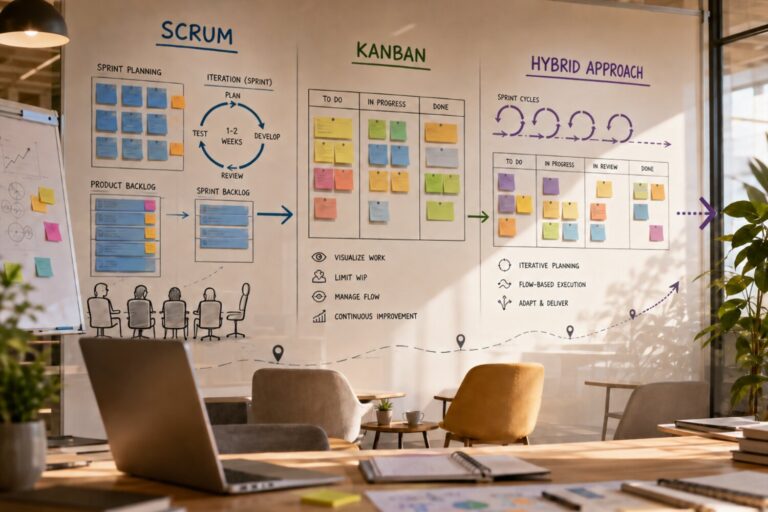
Agile methodology is a flexible approach to managing work, especially in software and product development. Instead of creating a long, fixed plan…
Remote IT technology work has transformed the way software teams plan, build, test, and deliver digital products. In this fast-moving environment, Agile methodologies provide the structure and flexibility needed to keep distributed teams aligned, productive, and focused on business value. Whether teams are working across cities, countries, or time zones, Agile helps create a shared workflow that supports communication, transparency, and continuous improvement.
Agile is especially valuable for remote technology teams because it breaks complex projects into manageable stages. Instead of waiting months to review progress, teams use short development cycles, often called sprints, to deliver updates regularly. This approach allows developers, designers, project managers, QA specialists, and stakeholders to respond quickly to feedback, shifting priorities, and market changes. For remote IT professionals, this means fewer misunderstandings, clearer goals, and a more reliable path from idea to launch.
One of the biggest strengths of Agile is its emphasis on collaboration. Daily standups, sprint planning, backlog refinement, and retrospectives help remote teams stay connected even when they are not in the same office. With the right digital tools, Agile workflows make it easier to track tasks, manage deadlines, share documentation, and measure progress. This creates a more organized and accountable remote work culture.
Agile methodologies also support better product quality. By testing and reviewing work throughout the development process, teams can identify problems earlier and make improvements before they become costly. This is particularly important in remote IT environments, where strong systems and repeatable processes help reduce delays and confusion.
For businesses, adopting Agile can lead to faster delivery, improved customer satisfaction, and more efficient use of technical talent. For IT professionals, it creates a work environment built around adaptability, ownership, and continuous learning. Agile encourages teams to reflect on what works, adjust what does not, and keep improving over time.
Explore this category to learn more about Agile frameworks, remote software development, Scrum, Kanban, team productivity, project management tools, and best practices for building successful distributed IT teams in today’s digital workplace.