What Is a Daily Standup?
A daily standup is a short team meeting where people quickly share what they are working on, what progress they have made, and whether anything is blocking them. The goal is not to review every detail of everyone’s work. Instead, the standup helps the team stay aligned, spot problems early, and adjust the day’s priorities when needed.
The term “standup” comes from the idea that the meeting should be brief enough that people could comfortably stand through it. While many teams now run standups over video calls or through written updates, the original idea still applies: keep the meeting focused, useful, and short.
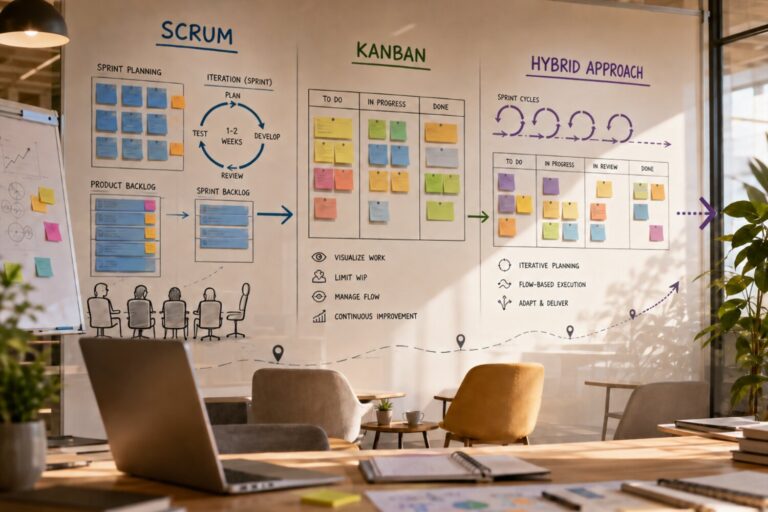
Daily standups are most common in Agile and Scrum environments, especially on software and product teams.
In Scrum, the meeting is often called the Daily Scrum and has a specific purpose: helping the team inspect progress and plan the next steps toward the sprint goal. Outside of Scrum, many teams use a looser version of the same practice. Marketing teams, operations teams, customer support teams, and leadership groups may all use daily standups to coordinate fast-moving work.
A typical standup answers three practical questions:
- What did you work on recently?
- What are you working on next?
- Is anything blocking your progress?
For example, instead of saying, “I’m working on the report,” a more useful standup update would be: “I finished the first draft of the client report yesterday. Today I’m adding the performance data and sending it for review. I’m waiting on final numbers from the analytics team.”
That kind of update gives the team helpful context. It shows progress, clarifies the next step, and identifies a possible delay.
A daily standup is different from a traditional status meeting. In a status meeting, updates are often directed toward a manager. In a strong standup, the conversation is directed toward the team. Everyone should leave with a clearer understanding of what matters today, where work may be stuck, and who may need help.
The best standups are simple, consistent, and action-oriented. They do not need to be formal, but they do need to be purposeful. When done well, a daily standup becomes a small routine that helps teams communicate better without adding unnecessary meeting time.
What Is the Purpose of a Daily Standup?
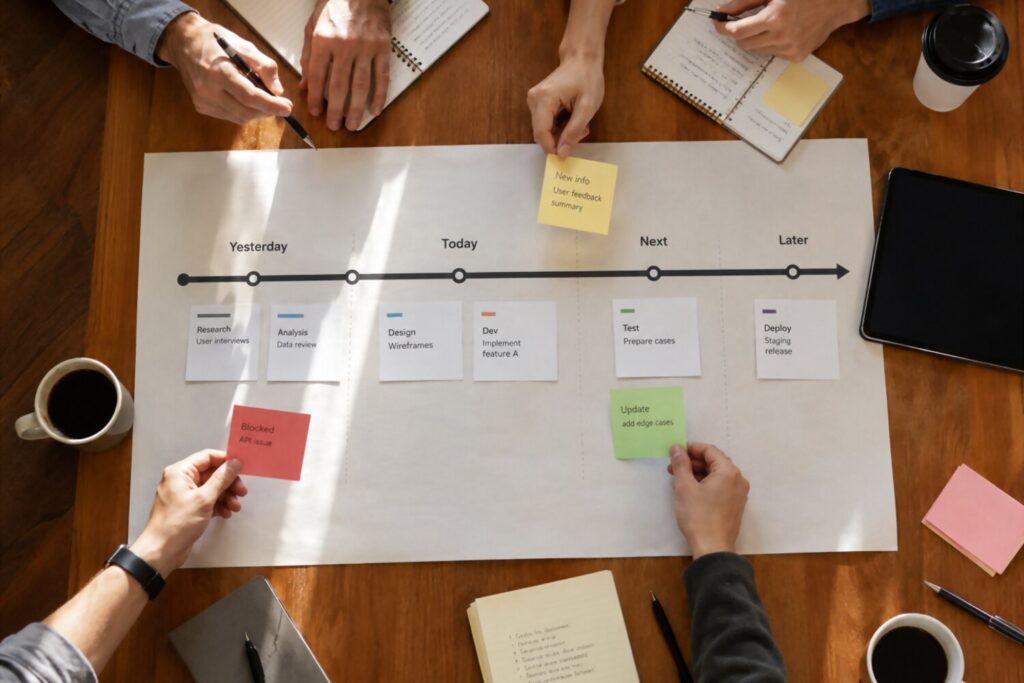
The purpose of a daily standup is to help a team stay aligned on what matters right now. It gives everyone a quick, shared understanding of current progress, upcoming work, and anything that could slow the team down. A good standup is not just a habit on the calendar; it should help the team make better decisions about the day ahead.
At its best, a daily standup helps answer one practical question: Are we still on track, and what needs attention today?
That means the meeting should focus less on individual activity and more on team coordination. For example, if one person is waiting on a design file, another is blocked by a code review, and a third is about to start related work, the standup gives the team a chance to connect those dots before delays grow.
A daily standup usually serves several important purposes:
- Create visibility into active work
Team members get a clear picture of what others are working on. This helps reduce duplicate effort, prevents surprises, and makes it easier to see how individual tasks connect to the larger goal. - Identify blockers early
Small issues can become major delays if no one knows about them. A standup gives people a simple, expected place to say, “I need help,” “I’m waiting on a decision,” or “This task is more complicated than expected.” - Improve daily prioritization
Plans can change quickly. A standup helps the team decide whether today’s work still makes sense or whether priorities should shift based on new information, urgent issues, or dependencies. - Encourage accountability without micromanagement
When each person briefly shares what they plan to do, the team gains a natural sense of ownership. The goal is not to pressure people or track every minute of their day. The goal is to make commitments visible and support each other in meeting them. - Keep the team focused on shared outcomes
A strong standup keeps attention on the sprint goal, project milestone, customer need, or business priority. This helps prevent the meeting from becoming a disconnected list of tasks.
One of the most important things to understand is that a standup is not meant to solve every problem in real time. If someone raises a complicated blocker, the team should acknowledge it, decide who needs to be involved, and move the detailed discussion to a follow-up conversation. This keeps the standup short while still making sure important issues are handled.
A useful daily standup should leave the team with more clarity than they had before it started. Everyone should understand what is moving forward, what is at risk, and where help is needed. When the meeting consistently produces that kind of clarity, it becomes a valuable coordination tool rather than just another recurring meeting.
What Should You Say in a Daily Standup?
In a daily standup, your update should help the team understand what changed, what you are doing next, and whether you need support. You do not need to describe every task in detail. The best updates are brief, specific, and connected to the team’s current priorities.
A simple structure is:
- What did I complete or make progress on since the last standup?
- What am I working on next?
- Is anything blocking me or putting the work at risk?
This format works because it gives the team enough context to coordinate without turning the meeting into a long status report. For example, saying “I worked on the homepage” is not very helpful. A stronger update would be: “I finished the homepage layout and sent it to design for review. Today I’m connecting the signup form. I may need help from engineering if the validation error continues.”
That update tells the team three useful things: the work moved forward, there is a clear next step, and there may be a technical issue that needs attention.
Here is a practical standup script you can adapt:
“Yesterday, I completed ____. Today, I’m focusing on ____. I’m blocked by ____ / I don’t have any blockers right now.”
You can also add a short note about dependencies when needed:
“I need feedback from ____ before I can move this forward.”
The most useful standup updates are clear, outcome-focused, and honest. If you are still working on the same task as yesterday, explain what changed or what remains unresolved. Instead of saying, “Still working on the same ticket,” try: “I’m still working on the payment bug. I found the issue in the API response yesterday, and today I’m testing the fix. No blockers yet, but I’ll need a code review this afternoon.”
It is also okay to say that you do not have a major update, as long as you still provide relevant context. For example: “No major progress to report because I was in client meetings most of yesterday. Today I’m returning to the onboarding flow and expect to finish the first draft.”
Our team’s view is that a good standup update should answer the question: What does the team need to know so we can move work forward today? That means you should avoid long explanations, side conversations, or updates that are only useful to your manager. Speak to the team, mention risks early, and be specific about where you need help.
A strong update does not have to be perfect. It just needs to make your work visible, make your next step clear, and give others a chance to support you before small issues become bigger problems.
Daily Standup Examples for Different Roles
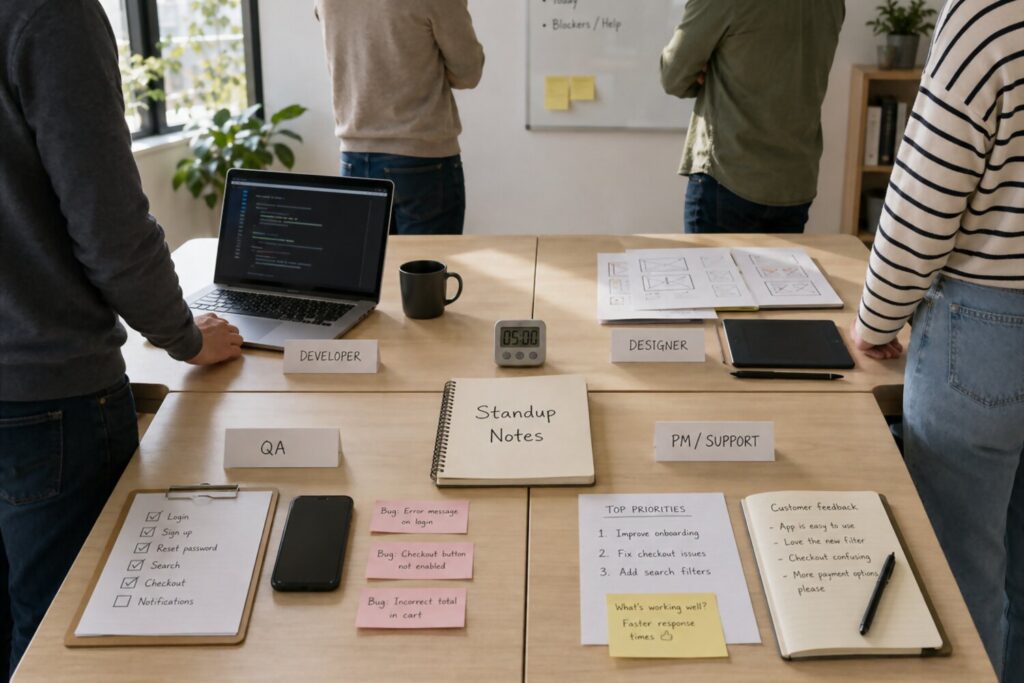
A daily standup is most useful when each person gives an update that fits their role and helps the team coordinate. The exact wording will vary, but the goal is the same: explain what moved forward, what you are doing next, and where you may need help.
Below are examples of effective standup updates for different roles.
Software Developer
“Yesterday, I finished the authentication changes and opened a pull request. Today, I’m addressing review comments and adding unit tests. I’m not blocked, but I’ll need a second reviewer before the end of the day.”
This update is helpful because it mentions the specific work completed, the next step, and a dependency that could affect timing.
Product Manager
“Yesterday, I finalized the acceptance criteria for the billing update and clarified two edge cases with support. Today, I’m reviewing the sprint backlog to make sure the highest-priority items are ready for development. I’m waiting on pricing confirmation before we can finalize one requirement.”
A product manager’s update should focus on decisions, priorities, requirements, and anything that could affect the team’s ability to build the right thing.
QA Tester
“Yesterday, I tested the new checkout flow and found two issues related to coupon validation. Today, I’m retesting the fixes and starting regression testing for the payment flow. I’m blocked on one test account that still needs admin access.”
QA updates are especially useful when they highlight defects, testing progress, and access or environment issues that could delay validation.
Designer
“Yesterday, I completed the mobile version of the onboarding screens. Today, I’m updating the error states and preparing the design handoff for engineering. I need feedback from product on the empty-state copy before I finalize the file.”
A strong design update connects creative work to team dependencies, such as feedback, handoff readiness, or decisions needed from stakeholders.
Marketing Team Member
“Yesterday, I drafted the launch email and added the first version to our campaign tool. Today, I’m writing the social posts and checking the landing page copy for consistency. I’m waiting on final product screenshots before scheduling the campaign.”
For marketing teams, standups work best when updates focus on deliverables, approvals, launch timing, and cross-functional dependencies.
Customer Support or Operations Team Member
“Yesterday, I reviewed the latest support tickets related to the new account setup flow. Today, I’m documenting the top three recurring issues and sharing them with product. I’m not blocked, but we may need a clearer help article before the next release.”
Support and operations updates can give the team valuable insight into customer friction, process gaps, and recurring problems that may not appear in the project board.
The best standup examples are not long, but they are specific. Instead of saying, “I worked on testing,” say what you tested, what you found, and what happens next. Instead of saying, “I’m waiting on feedback,” name the decision or input you need. Clear updates help the team act faster and make the standup feel useful rather than routine.
How to Run an Effective Daily Standup
An effective daily standup is short, focused, and useful to the people doing the work. The goal is not to fill a meeting slot or hear every detail from every team member. The goal is to help the team understand what is moving forward, what needs attention, and what might get in the way.
A good standup usually works best when it follows a consistent format. Teams do not need a complicated agenda, but they do need a shared expectation for what should happen during the meeting.
| Standup Element | What It Means | Why It Matters |
|---|---|---|
| Timebox | Keep the meeting brief, often around 15 minutes or less | Prevents the standup from becoming a long status meeting |
| Clear focus | Discuss progress, plans, and blockers | Keeps updates relevant to the team’s current goals |
| Shared view of work | Use a task board, sprint board, or project tracker | Helps the team talk about actual work instead of vague updates |
| Follow-up process | Move detailed discussions outside the standup | Protects everyone’s time while still addressing problems |
| Action items | Clarify who will help with blockers after the meeting | Makes the standup lead to real progress |
To run the meeting well, start by making sure everyone understands the purpose. A standup should help the team coordinate, not perform for a manager. If updates are only directed to one person, the meeting can quickly become a reporting session instead of a team conversation.
A simple approach is to go person by person or move through the team’s task board. Many teams find the board-based method more effective because it keeps the discussion tied to current priorities. Instead of asking, “What did everyone do yesterday?” the facilitator can ask, “What work is in progress, what is blocked, and what needs to move forward today?”
The facilitator’s role is to keep the meeting on track. That does not mean rushing people or cutting off important information. It means recognizing when a topic needs a separate conversation. For example, if two developers need to discuss the details of a technical issue, the facilitator can say, “That sounds important. Let’s have the right people stay after the standup so we do not hold up the full team.”
A strong daily standup should usually end with a few clear takeaways:
- Who is working on what today
- Which tasks are blocked or at risk
- Who needs help from whom
- What conversations should happen after the standup
Consistency also matters. Holding the standup at the same time each day can reduce confusion and make attendance easier. However, the format should still serve the team. A remote team across multiple time zones may benefit from an async update instead of a live meeting every day. A small team with fast-moving work may need a daily check-in, while another team may find that fewer meetings work better.
The best standups are practical and adaptable. If the meeting is too long, too vague, or not leading to better coordination, adjust it. The measure of a good standup is not whether the team follows a script perfectly. It is whether everyone leaves with a clearer understanding of the day’s priorities and what needs to happen next.
Common Daily Standup Mistakes to Avoid

A daily standup can be a valuable team habit, but only when it stays focused on coordination. When the meeting becomes vague, too long, or overly manager-driven, people may start to see it as a routine obligation instead of a useful part of the workday.
Here are some common mistakes that can make standups less effective.
Turning the Standup Into a Status Report
One of the biggest mistakes is treating the standup as a report to a manager. If every update is directed toward one person, the team loses the chance to coordinate with each other.
A better approach is to speak to the team. Instead of thinking, “What does my manager need to know?” ask, “What does the team need to know so our work can move forward?”
Giving Vague Updates
Updates like “I’m still working on the task” or “No blockers” may be accurate, but they often do not provide enough context. A stronger update explains what changed, what is next, and whether anything could affect progress.
For example:
- Vague: “Still working on the login issue.”
- Better: “I found the cause of the login issue yesterday. Today I’m testing the fix across browsers. I may need QA support if the session timeout problem continues.”
Specific updates help teammates understand progress and spot where they can help.
Solving Every Problem During the Meeting
A standup should surface blockers, not become a full problem-solving session for every issue. When detailed discussions take over, the meeting can quickly become too long and less useful for people who are not involved.
If a topic needs deeper discussion, identify who should be part of the follow-up and move on. For example: “Let’s have engineering and QA stay after to work through that issue.”
Ignoring Blockers or Risks
Some team members avoid mentioning blockers because they do not want to seem behind or unprepared. This can create bigger problems later. A blocker is not a personal failure; it is information the team needs in order to adjust.
Good standups make it safe and normal to say things like:
- “I need a decision before I can continue.”
- “This task is larger than expected.”
- “I’m waiting on access.”
- “I may not finish this today unless priorities change.”
The earlier a risk is visible, the easier it is to handle.
Letting the Meeting Run Too Long
A daily standup should be brief enough to support the day’s work, not interrupt it. If the meeting regularly runs long, it may be trying to do too much. Long updates, side conversations, and unclear facilitation are common causes.
To keep the meeting focused, use a simple rule: if the discussion does not affect most of the team, move it to a smaller follow-up conversation.
Repeating the Same Update Every Day
If someone gives the same update several days in a row, that is a signal to pause and ask what is happening. The issue may be unclear requirements, hidden complexity, competing priorities, or lack of support.
Instead of saying, “Still working on it,” try to explain the reason:
“This is taking longer than expected because the data format changed. Today I’m confirming the new requirements with product, then I’ll update the implementation plan.”
That kind of update gives the team something useful to act on.
Holding a Standup That No Longer Serves the Team
A daily standup should earn its place on the calendar. If the team is not learning anything useful, resolving blockers faster, or improving coordination, the format may need to change.
That does not always mean canceling the meeting. It may mean using a task board, switching to async updates, shortening the agenda, or clarifying what counts as a useful update.
The best way to avoid these mistakes is to keep the standup centered on its real purpose: helping the team understand what is happening, what needs attention, and how to move work forward today.
Daily Standups for Remote, Hybrid, and Async Teams
Daily standups can work well for remote and hybrid teams, but they often need a slightly different approach than in-person meetings. When people are spread across locations or time zones, the goal is still the same: help everyone understand what is moving forward, what is blocked, and where coordination is needed.
For remote teams, a live video standup can be useful when team members work similar hours and need quick discussion. The meeting should still stay short and focused. Cameras are not always required, but everyone should be prepared to give a clear update and listen for dependencies that affect their work.
A remote standup may follow the same basic format:
- What did I complete or make progress on?
- What am I working on next?
- What is blocked, unclear, or at risk?
- Who do I need help from today?
Hybrid teams should be especially careful about creating an uneven experience. If some people are in a conference room and others are joining remotely, remote participants can easily become passive observers. To avoid this, use one shared meeting link, make sure everyone can hear clearly, and avoid side conversations in the room that remote teammates cannot follow.
For teams across multiple time zones, an async standup may be more practical than a live daily meeting. In an async standup, each person posts their update in a shared tool such as Slack, Microsoft Teams, Jira, Linear, Notion, or another project management platform. This allows people to contribute when their workday begins, without forcing everyone into an inconvenient meeting time.
A strong async update should be just as specific as a live one. For example:
“Yesterday, I completed the first draft of the onboarding email sequence. Today, I’m adding product screenshots and sending it to design for review. I’m blocked until the final screenshot set is approved.”
Async standups work best when the team sets clear expectations. Decide where updates should be posted, when they are due, and how blockers should be handled. A blocker should not sit unnoticed in a thread all day. If someone posts that they need help, the right person should respond or move the issue into a direct follow-up conversation.
It can also help to use a simple template:
Yesterday:
Today:
Blocked or at risk:
Need help from:
The main risk with remote or async standups is that updates become disconnected from action. A written update is not useful if no one reads it, responds to blockers, or adjusts plans based on what the team shares. Whether the standup happens on video or in writing, someone should watch for patterns: repeated blockers, unclear priorities, overloaded teammates, or work that is not moving.
The best format depends on the team’s workflow. A small team working the same hours may benefit from a quick live standup. A distributed team may get more value from async updates with targeted follow-ups. The format matters less than the outcome: everyone should know what matters today, what needs attention, and how the team will keep work moving.
Daily Standup Template and FAQ
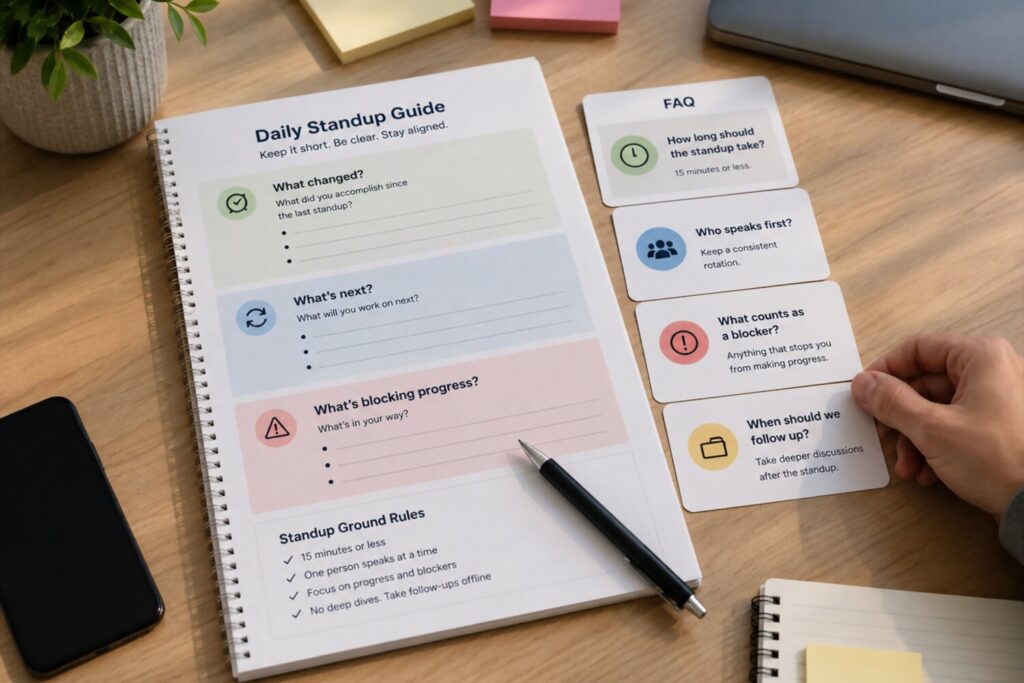
A daily standup is easier to keep focused when everyone uses a simple structure. The template should be short enough to use every day, but specific enough to give the team useful information.
Here is a practical daily standup template:
Yesterday: I completed or made progress on _____.
Today: I’m focusing on _____.
Blocked or at risk: I’m blocked by _____ / No blockers right now.
Need help from: I need input, review, access, or a decision from _____.
For example:
Yesterday: I finished the first version of the pricing page updates.
Today: I’m testing the page on mobile and preparing it for review.
Blocked or at risk: No blockers right now, but timing may be tight if we get major copy changes.
Need help from: I need final approval from marketing by the end of the day.
This format works because it keeps the update tied to progress, priorities, and action. It also helps people mention risks before they become bigger problems.
Daily Standup FAQ
How long should a daily standup be?
A daily standup should usually be brief, often around 15 minutes or less. If the meeting regularly takes longer, the team may be discussing too many details or solving problems that should move to follow-up conversations.
Does a standup have to happen every day?
Not always. Many Agile teams use a daily rhythm because their work changes quickly, but the right cadence depends on the team. If daily meetings do not add value, the team can try async updates, fewer live meetings, or a different check-in format.
What should I say if I have no update?
Be honest, but still give helpful context. For example: “No major progress since yesterday because I was focused on client calls. Today I’m returning to the reporting dashboard, and I do not have any blockers.” This is more useful than simply saying, “Nothing new.”
Should managers attend daily standups?
Managers can attend if their presence helps remove blockers or clarify priorities. However, they should avoid turning the meeting into a performance check-in. The standup should remain a team coordination meeting, not a one-way report to leadership.
What is the difference between a standup and a status meeting?
A status meeting usually focuses on reporting progress, often to a manager or stakeholder. A standup focuses on team coordination: what changed, what is next, what is blocked, and what needs attention today.
What should happen after someone raises a blocker?
The team should quickly decide who needs to help and when the follow-up will happen. The full group does not need to solve the issue during the standup unless it is brief and relevant to everyone.
A strong daily standup does not require a complicated script. It needs clear updates, visible blockers, and a habit of turning information into action. When the template and follow-up process are consistent, the meeting becomes easier to run and more useful for the whole team.
Expert Tips & Pro Insights
A daily standup may look simple, but small changes in how the team runs it can make a big difference. The most effective standups are not just fast; they help people make better decisions about the work in front of them.
Focus on Work Flow, Not Just Individual Updates
A common standup format asks each person what they did yesterday, what they will do today, and whether they have blockers. That can work well, but it sometimes turns into a list of individual reports.
A stronger approach is to connect updates to the flow of work. Look at the task board, sprint board, or project tracker and ask:
- What work is closest to completion?
- What is blocked or waiting for review?
- What needs attention today to keep the goal on track?
- Is anyone overloaded or waiting on someone else?
This shifts the standup from “What did everyone do?” to “What does the team need to move forward?”
Make Blockers Specific
Saying “I’m blocked” is a useful start, but the team also needs to know what kind of help is needed. A blocker may involve missing access, unclear requirements, delayed feedback, a technical issue, or a decision from another team.
Instead of saying:
“I’m blocked on the dashboard.”
Try:
“I’m blocked on the dashboard because I do not have access to the analytics data. I need someone with admin permissions to approve the request today.”
That kind of update makes the next action obvious.
Keep Problem-Solving Visible but Separate
A standup should reveal problems, not hide them. However, it should not become a long troubleshooting session. When a deeper issue comes up, name the follow-up clearly:
“Let’s have Alex, Priya, and Jordan stay after for 10 minutes to work through the API issue.”
This protects the team’s time while still making sure the blocker gets attention.
Encourage Updates That Mention Risk Early
One of the most valuable things a standup can do is surface risk before it becomes urgent. Team members should feel comfortable saying when something is uncertain, delayed, or larger than expected.
Useful phrases include:
- “This may take longer than planned because…”
- “I need a decision before I can continue.”
- “I’m not blocked yet, but this could become a blocker if…”
- “I may need help later today with…”
These updates help the team adjust before deadlines or sprint goals are affected.
Review the Standup Itself Occasionally
Even a good standup can become stale over time. Every few weeks, the team should ask whether the meeting is still useful.
Helpful questions include:
- Are we learning anything important during standup?
- Are blockers getting resolved faster?
- Are updates specific enough to help the team coordinate?
- Should we change the format, timing, or cadence?
A daily standup should serve the team, not the other way around. When the meeting helps people understand priorities, remove obstacles, and coordinate better, it is doing its job.