Hybrid Work Schedule: Definition and Core Meaning
A hybrid work schedule is a work arrangement that combines remote work with in-person work. Instead of working entirely from an office or entirely from home, employees split their time between different work settings, usually based on a company’s expectations, team needs, or the type of work being done.
In practical terms, a hybrid schedule might mean working from the office a few days each week and working remotely on the remaining days. For example, an employee may come into the office on Tuesdays and Wednesdays for meetings, collaboration, and team planning, then work from home on other days for focused tasks. In another organization, employees may have more flexibility to choose their remote and in-office days as long as they meet business and communication expectations.
The key point is that hybrid work is not one fixed schedule. It is a broad category that can look different from one workplace to another. Some companies use a structured model with required office days, while others allow employees or teams to decide what works best within clear guidelines. A hybrid schedule can also vary by role. Jobs that require frequent in-person collaboration, hands-on equipment, or direct customer support may have different expectations than roles that can be performed mostly online.
A well-designed hybrid work schedule is more than simply allowing people to work from home sometimes. It should define when employees are expected to be available, how teams communicate, which meetings happen in person, and what work is best suited for remote or office days. This clarity helps reduce confusion and supports a more consistent experience for both employees and managers.
At its core, a hybrid work schedule is meant to balance the benefits of remote flexibility with the value of in-person connection. Remote days can support focus, fewer commute-related disruptions, and more control over the work environment. Office days can support collaboration, relationship-building, training, brainstorming, and quick problem-solving. When the schedule is intentional, hybrid work can give teams a clearer structure for deciding where work happens best.
How a Hybrid Work Schedule Works in Practice

A hybrid work schedule works by setting expectations for when employees work remotely and when they work in person. The exact setup depends on the organization, but most hybrid schedules are built around a few practical questions: Which days are spent in the office? Which tasks can be done remotely? When should teams meet face-to-face? How will employees stay connected when they are not in the same place?
In many workplaces, hybrid work follows a weekly rhythm. For example, a company may ask employees to come into the office on Tuesday, Wednesday, and Thursday, while allowing remote work on Monday and Friday. Another team might use “anchor days,” where everyone is expected to be in the office on specific days for meetings, planning, training, or collaboration. The rest of the week may be reserved for independent work that can be done from home or another approved remote location.
A hybrid schedule usually works best when it is tied to the type of work being done. Office days are often used for activities that benefit from real-time interaction, such as brainstorming sessions, team check-ins, onboarding, client meetings, project planning, or complex problem-solving. Remote days are often better suited for focused work, writing, analysis, administrative tasks, research, or individual project work.
Clear communication is also essential. Employees need to know how to share updates, where to find information, and when they are expected to be available. Most hybrid teams rely on tools such as shared calendars, project management platforms, video meetings, chat apps, and cloud-based documents. These tools help prevent confusion and make it easier for people to collaborate even when they are working in different locations.
A practical hybrid schedule often includes:
- Defined office days or clear rules for choosing them
- Shared calendars so teammates know who is working where
- Meeting norms for when to meet in person versus online
- Core collaboration hours when everyone is reachable
- Clear expectations for communication, deadlines, and availability
Our team’s view is that hybrid work should not be treated as a casual perk or a vague arrangement. It works best when it is designed with purpose. A strong hybrid schedule gives employees enough flexibility to do focused work while still creating reliable opportunities for connection, teamwork, and shared decision-making.
Common Types of Hybrid Work Schedules
Hybrid work schedules can take several forms, and the right model often depends on the organization’s workflow, team structure, and customer or client needs. Some hybrid schedules are highly structured, while others give employees more choice. Understanding the main types can help readers compare what different employers mean when they use the term “hybrid.”
| Type of Hybrid Schedule | How It Works | Best Used When |
|---|---|---|
| Fixed hybrid schedule | Employees work in the office on assigned days and remotely on the remaining days. | Teams need predictability and regular in-person coordination. |
| Flexible hybrid schedule | Employees choose their remote and office days within company or team guidelines. | Work can be completed independently and schedules do not require everyone in the same place daily. |
| Team-based hybrid schedule | Each team sets shared office days based on collaboration needs. | Different departments have different workflows or meeting rhythms. |
| Role-based hybrid schedule | Hybrid expectations vary by job function or responsibilities. | Some roles require more in-person work than others. |
| Remote-first hybrid schedule | Remote work is the default, with occasional in-person meetings or office days. | Teams can work effectively online but still benefit from periodic face-to-face connection. |
| Office-first hybrid schedule | Office work is the default, with limited remote days allowed. | The workplace relies heavily on in-person collaboration, equipment, supervision, or customer interaction. |
A fixed hybrid schedule is one of the easiest models to understand. For example, employees may work in the office Tuesday through Thursday and work remotely Monday and Friday. This approach gives teams a reliable routine, which can make meetings, training, and collaboration easier to plan. The tradeoff is that it offers less personal flexibility.
A flexible hybrid schedule gives employees more control over where they work on a given day. This can work well when performance is measured by output, deadlines, and communication rather than physical presence. However, it still needs clear expectations. Without basic guidelines, flexible hybrid work can lead to scheduling gaps, missed collaboration opportunities, or confusion about availability.
A team-based hybrid schedule is often more practical for organizations with different departments doing different kinds of work. For example, a marketing team may choose shared office days for campaign planning, while a finance team may come in during reporting periods. This model recognizes that hybrid work is not always best managed with a one-size-fits-all rule.
A role-based hybrid schedule sets expectations according to job responsibilities. Some employees may need to be on-site more often because their work involves equipment, facilities, in-person service, or close coordination with others. Other roles may be able to work remotely most of the time. The important point is that the reasoning should be clear and tied to the work itself.
Remote-first and office-first hybrid schedules sit on opposite ends of the spectrum. In a remote-first hybrid model, employees primarily work remotely and come together for planning sessions, team-building, training, or major project milestones. In an office-first hybrid model, employees spend most of their time in the workplace but may have occasional remote days for focused work or flexibility.
The best hybrid schedule is the one that matches how work actually gets done. A useful model should answer three practical questions: When do people need to be together? What work can be done independently? How will the team stay aligned when people are in different places?
Benefits of a Hybrid Work Schedule
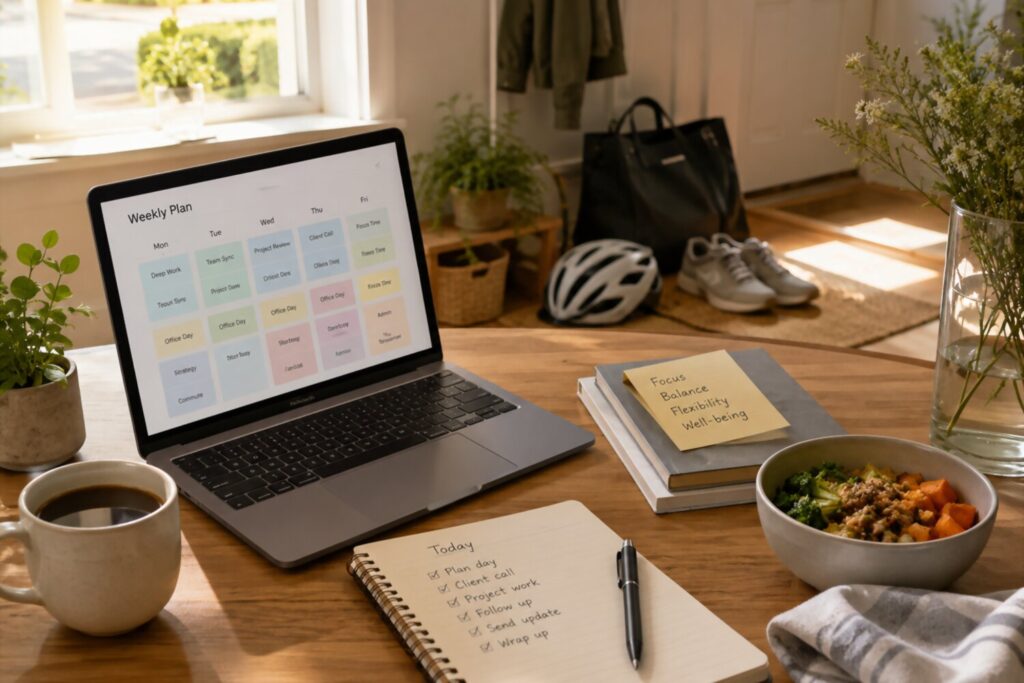
A hybrid work schedule can offer practical advantages for both employees and employers when it is planned well. Its main value is that it gives teams more flexibility while still preserving opportunities for in-person collaboration. Instead of treating every workday the same, hybrid work allows organizations to match the work setting to the task.
For employees, one of the most noticeable benefits is greater control over the workday. Remote days can make it easier to focus on independent tasks, reduce commuting time, and create a work environment that supports concentration. This can be especially helpful for work that requires writing, analysis, planning, research, or deep problem-solving. Office days, on the other hand, can be used for activities that benefit from direct interaction, such as brainstorming, team discussions, coaching, training, and relationship-building.
For employers and managers, hybrid work can create a more intentional approach to collaboration. When teams know which days are meant for in-person work, office time can be used more purposefully. Instead of coming in only to sit through video calls, employees can use shared office days for meetings, project kickoffs, decision-making, and informal conversations that are harder to recreate online.
Common benefits of a hybrid work schedule include:
- More flexibility: Employees may have more room to structure their work around focus time, meetings, and personal productivity patterns.
- Reduced commute burden: Fewer office days can mean less time spent traveling to and from work.
- Better task alignment: Teams can reserve office days for collaboration and remote days for independent work.
- Stronger in-person connection: Regular office time can support trust, communication, mentoring, and team culture.
- Improved access to talent: Employers may be able to consider candidates who are not available for a traditional five-day office schedule.
- More efficient use of office space: Organizations may be able to plan workspace needs around actual in-office patterns.
The biggest benefit of hybrid work is not simply “working from home sometimes.” It is the ability to design work around what people are trying to accomplish. A thoughtful hybrid schedule helps employees understand where they should be, why that setting matters, and how their work connects with the rest of the team.
That said, hybrid work is most effective when expectations are clear. Flexibility works best when employees know how to communicate, when to be available, and what outcomes they are responsible for delivering. When those basics are in place, a hybrid schedule can support both individual focus and meaningful teamwork.
Challenges and Drawbacks of Hybrid Work
A hybrid work schedule can be effective, but it is not automatically easier than a fully remote or fully in-office model. In many cases, hybrid work requires more planning because employees are moving between different work environments. Without clear expectations, teams may run into confusion about availability, communication, meetings, and decision-making.
One common challenge is coordination. When some employees are in the office and others are remote, simple tasks can take more effort. A quick hallway conversation may leave remote team members out of the loop. A meeting may be scheduled for an office day, but key participants may be working remotely. Over time, these small disconnects can create frustration if teams do not have reliable ways to share updates and document decisions.
Another drawback is the risk of uneven visibility. Employees who spend more time in the office may naturally have more informal interactions with managers and coworkers. Remote employees may miss casual conversations, spontaneous brainstorming, or early discussions about new projects. This does not mean hybrid work is unfair by default, but it does mean managers need to be intentional about communication, recognition, and access to opportunities.
Hybrid work can also blur boundaries. On remote days, some employees may find it difficult to separate work time from personal time. On office days, packed meeting schedules can make it harder to complete focused work. If the schedule is not designed carefully, employees may feel like they are constantly switching contexts rather than getting the best of both remote and in-person work.
Common challenges of hybrid work include:
- Communication gaps: Important updates may not reach everyone at the same time.
- Scheduling conflicts: Teams may struggle to align office days, meetings, and collaboration time.
- Meeting overload: Hybrid teams may rely too heavily on meetings to stay connected.
- Technology issues: Poor audio, video, or document access can make collaboration harder.
- Culture-building difficulties: It can take more effort to build trust and connection across locations.
- Inconsistent expectations: Employees may feel uncertain about when they should be in the office or how performance is evaluated.
The biggest mistake organizations make with hybrid work is assuming flexibility alone will solve workplace problems. A hybrid schedule needs structure, not guesswork. Teams should agree on when to meet, how to communicate, where information is stored, and which activities are worth doing in person.
A practical way to reduce these drawbacks is to treat hybrid work as an operating system for the team. That means setting norms, reviewing what is working, and making adjustments when the schedule creates friction. When leaders and employees discuss challenges openly, hybrid work becomes easier to manage and more useful in day-to-day operations.
What Makes a Hybrid Work Schedule Successful?
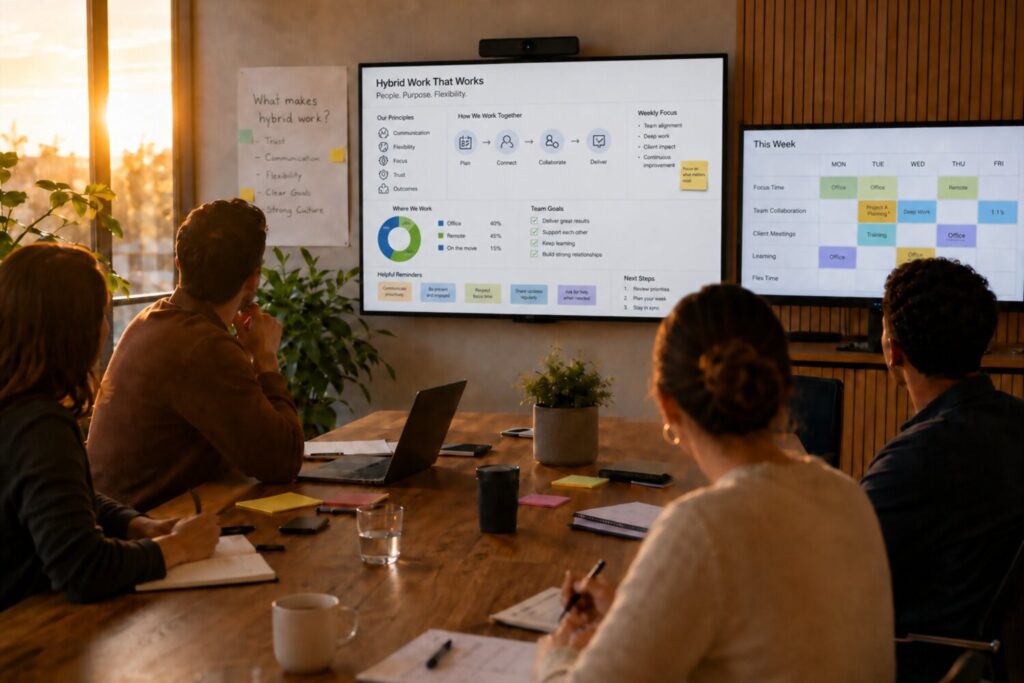
A successful hybrid work schedule is built on clarity, consistency, and purpose. It should help employees understand not only where they are expected to work, but also why certain work happens in a specific setting. When hybrid work is thoughtfully designed, office days and remote days each serve a clear function instead of feeling random or inconvenient.
The first requirement is clear expectations. Employees should know which days they are expected to be in the office, how much flexibility they have, and how schedule changes should be handled. Managers should also explain how availability, communication, deadlines, and meetings will work across remote and in-person days. Without this clarity, hybrid work can quickly become confusing or uneven.
A strong hybrid schedule also depends on purposeful office time. In-person days should be used for work that benefits from direct interaction, such as team planning, brainstorming, onboarding, coaching, project kickoffs, or relationship-building. If employees commute to the office only to sit in virtual meetings all day, the schedule may feel poorly designed. Remote days, by contrast, can be protected for focused work, individual tasks, writing, analysis, and follow-up.
Communication norms are another major factor. Hybrid teams need shared habits for keeping everyone informed, whether they are at home, in the office, or traveling between locations. This may include documenting decisions, using shared project tools, keeping calendars updated, and deciding which conversations belong in chat, email, video meetings, or in-person discussions.
A successful hybrid schedule often includes:
- Defined office expectations: Employees know when in-person attendance is expected and why.
- Reliable communication channels: Teams use consistent tools for updates, files, decisions, and deadlines.
- Fair meeting practices: Remote and in-office participants can contribute without being overlooked.
- Manager consistency: Leaders apply expectations clearly and focus on work outcomes, not just physical presence.
- Useful technology: Employees have access to the tools needed to work effectively in both settings.
- Regular feedback: Teams review what is working and adjust the schedule when problems appear.
It is also important to support managers. Leading a hybrid team requires planning, communication discipline, and awareness of how work is distributed. Managers should be able to coordinate schedules, include remote employees in discussions, and recognize contributions without relying only on who is most visible in the office.
A practical way to evaluate a hybrid schedule is to ask: Does this arrangement make collaboration easier, protect focus time, and keep expectations fair and understandable? If the answer is yes, the schedule is more likely to support both productivity and team connection. If the answer is no, the issue may not be hybrid work itself, but the way the schedule is designed.
Hybrid Work Schedule Examples
Hybrid work schedules can look very different depending on the team, role, and type of work involved. Some organizations use a consistent weekly pattern, while others design schedules around project deadlines, client needs, or collaboration days. The most useful examples are not just about how many days employees spend in the office; they also show why those days are arranged that way.
One common model is the three-days-in-office, two-days-remote schedule. For example, employees may work in the office Tuesday through Thursday and work remotely on Monday and Friday. This setup gives teams several shared days for meetings, planning, training, and collaboration while still preserving remote days for focused work. It can be helpful for teams that need regular face-to-face coordination but do not require everyone on-site every day.
Another popular option is the two anchor days schedule. In this model, everyone comes into the office on the same two days each week, such as Tuesday and Wednesday. These anchor days are typically used for team meetings, project updates, brainstorming, and one-on-one conversations. The remaining days may be remote or flexible, depending on the organization’s expectations. This approach can work well when teams want predictable in-person time without requiring a longer office week.
A remote-first hybrid schedule makes remote work the normal routine and uses in-person time more selectively. For instance, a team may work remotely most of the month and meet in person once a month for strategy sessions, workshops, or team-building. This model can be useful for teams whose daily work can be done online but who still benefit from occasional face-to-face connection.
Some workplaces use a rotating hybrid schedule, especially when office space is limited or teams need coverage on different days. For example, Team A may come in on Monday and Wednesday, while Team B comes in on Tuesday and Thursday. This can help manage office capacity and ensure that the workplace is used efficiently. However, it requires careful planning so teams do not miss important collaboration opportunities.
Here are a few practical examples:
- 3 days in office, 2 days remote: Best for teams that need frequent collaboration and regular in-person meetings.
- 2 anchor days, 3 flexible days: Best for teams that want shared office time but still value individual flexibility.
- Remote-first with monthly office days: Best for teams that can work independently online but need occasional in-person planning.
- Alternating weeks: Best for project-based teams that need concentrated collaboration during certain periods.
- Role-based hybrid schedule: Best when some roles require more on-site work than others due to the nature of the job.
The right hybrid schedule should match the way work actually happens. A customer-facing team, a software team, an operations team, and a creative team may all need different arrangements. Before choosing a model, it helps to ask: Which tasks require in-person collaboration? Which tasks benefit from quiet focus? When does the team need to be available at the same time? These questions make the schedule more practical and easier to follow.
Is a Hybrid Work Schedule Right for You or Your Team?

A hybrid work schedule can be a strong option when the work benefits from both independent focus and in-person collaboration. However, it is not the right fit for every role, team, or organization. The best way to evaluate hybrid work is to look at how the work actually gets done, not just where employees prefer to work.
For employees, a hybrid schedule may work well if your role includes tasks that can be completed remotely, such as writing, planning, research, analysis, design, coding, reporting, or project coordination. It may also be useful if you benefit from quieter focus time on some days and in-person interaction on others. At the same time, hybrid work requires discipline. You need to manage your calendar, communicate clearly, stay visible through your work, and keep track of expectations across remote and office days.
For managers and teams, the question is not simply whether hybrid work is convenient. The more important question is whether the schedule supports the team’s goals. Some teams need regular in-person time for training, customer support, equipment use, creative sessions, or fast decision-making. Others can complete much of their work online but still need occasional office days to build relationships, align on strategy, or solve complex problems together.
Before choosing or evaluating a hybrid work schedule, consider these questions:
- What tasks require in-person collaboration?
- Which responsibilities can be handled effectively from a remote setting?
- How often does the team need to meet face-to-face?
- Are communication expectations clear for remote and office days?
- Do employees have the tools and access they need in both locations?
- Will the schedule make teamwork easier or add unnecessary complexity?
- How will managers keep expectations fair, consistent, and focused on outcomes?
A hybrid schedule is more likely to work when it has a clear purpose. For example, office days might be reserved for team meetings, brainstorming, mentoring, and planning, while remote days are protected for individual work and follow-through. This kind of structure helps employees understand why they are working in a particular place on a particular day.
It is also important to review the schedule over time. A hybrid arrangement that works during one season, project, or growth stage may need to be adjusted later. Teams should pay attention to communication gaps, missed deadlines, meeting overload, or signs that employees are unclear about expectations.
Ultimately, a hybrid work schedule is right for you or your team if it improves how work gets done. It should create a practical balance between flexibility and connection, not confusion. When hybrid work is built around clear expectations, thoughtful coordination, and the real needs of the job, it can help teams use both remote and in-person work more effectively.
Expert Tips & Pro Insights
A hybrid work schedule works best when it is treated as a deliberate work system, not just a compromise between remote and office work. The goal is to help people choose the right setting for the right type of work while keeping teams aligned, included, and productive.
Here are practical tips for making hybrid work more effective:
- Design office days around collaboration. Use in-person time for activities that benefit from live discussion, such as planning sessions, brainstorming, onboarding, mentoring, and complex decision-making. If employees commute only to spend the day on video calls, the schedule may need to be redesigned.
- Protect remote days for focused work. Remote days are often most useful for tasks that require concentration, such as writing, analysis, research, reporting, design, or project follow-up. Teams should avoid filling every remote day with back-to-back meetings.
- Set clear communication rules. Hybrid teams need shared expectations for response times, meeting formats, file storage, project updates, and calendar visibility. Clear norms reduce confusion and help employees stay informed even when they are not in the same location.
- Document important decisions. A quick office conversation can be useful, but key decisions should be written down where the full team can access them. This helps prevent information gaps between remote and in-office employees.
- Review the schedule regularly. A hybrid schedule should not be treated as permanent just because it was introduced once. Teams should check whether office days are useful, remote days are productive, and employees understand expectations.
- Train managers to lead across locations. Managing a hybrid team requires more than tracking who is in the office. Strong managers focus on outcomes, keep communication consistent, and make sure remote employees are included in discussions and opportunities.
For deeper context, readers may find these resources useful: the OECD’s page on telework and productivity and the ILO’s publication on working time and work-life balance.
The main insight is simple: hybrid work should have a clear purpose. When office days support connection and remote days support focused execution, the schedule becomes easier to understand and easier to manage.