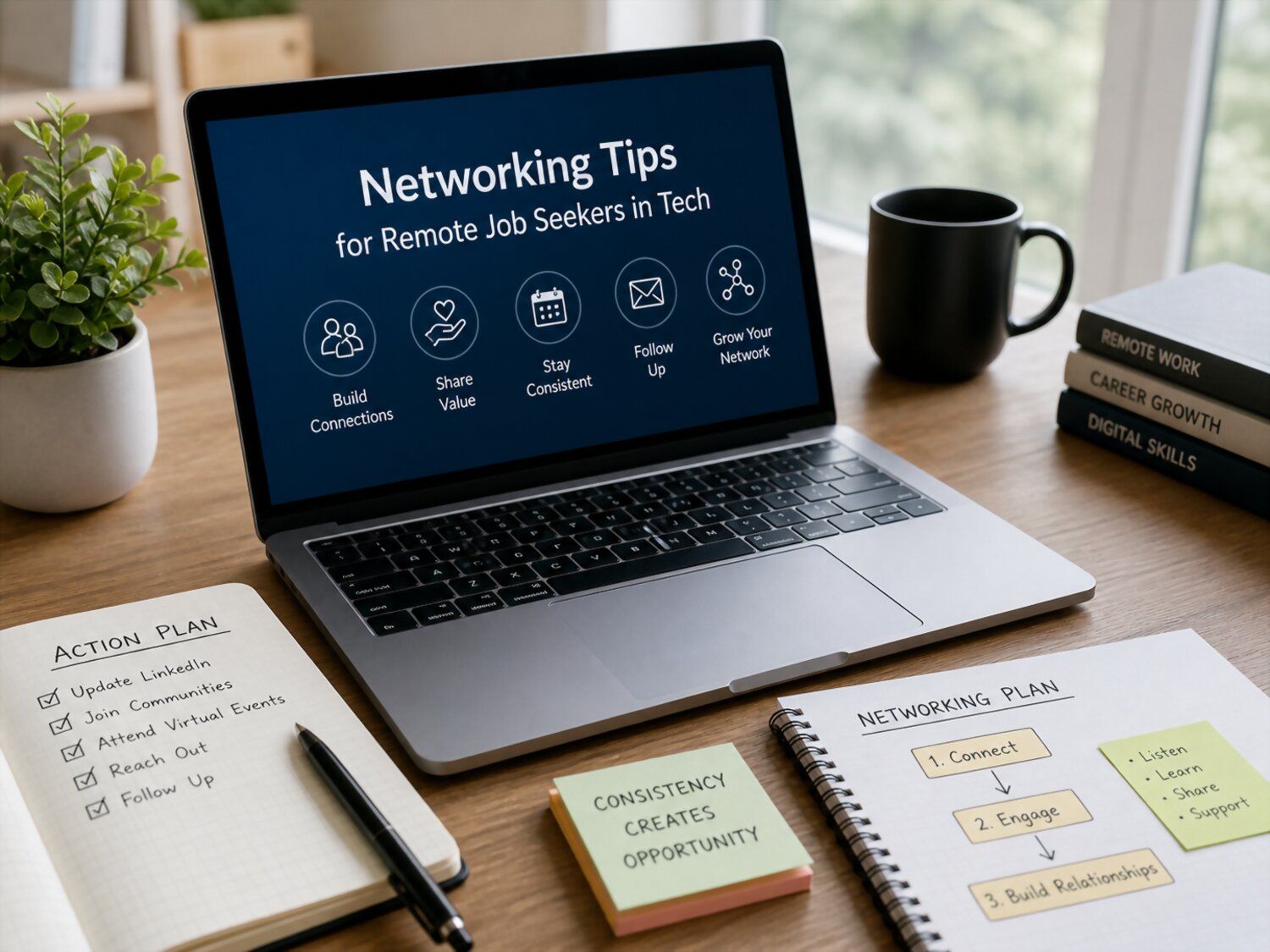
The Remote Networking Mindset: Be Visible Before You Need a Job
Remote job seekers in tech often think networking begins when they start applying. In reality, the strongest remote opportunities usually come from relationships, reputation, and repeated visibility built before there is an urgent need for work. This is especially true in tech, where hiring teams are often distributed, communication happens online, and trust is built through digital signals long before an interview.
Remote networking is not about asking strangers for favors. It is about becoming recognizable in the right professional spaces. When people have already seen your name attached to useful comments, thoughtful questions, open source contributions, technical posts, or helpful community participation, your job search becomes warmer. You are no longer just another applicant in a crowded inbox. You are someone with context.
Visibility Is a Career Asset in Remote Tech
In an office, visibility can happen naturally. People see how you solve problems, how you communicate, and how you support a team. In a remote tech career, much of that visibility has to be created intentionally.
This does not mean posting every day or trying to become a personal brand influencer. For most remote job seekers in tech, visibility can be simple and practical. It can mean answering a question in a developer community, sharing a lesson from a project, commenting thoughtfully on an engineering discussion, or documenting a problem you solved.
The goal is not popularity. The goal is professional recall. When someone hears about a remote developer role, product role, data role, security role, DevOps position, or UX opening, you want them to think, “I know someone who might be a good fit.”
That kind of recall is created through repeated, useful presence.
Be Helpful Before You Are Looking
One of the most effective networking tips for remote job seekers is to contribute before making an ask. People are more likely to respond to you when they have seen you add value without immediately seeking something in return.
In tech communities, value can take many forms. You might clarify documentation, share a fix for a common bug, recommend a resource, review someone’s portfolio, explain how you approached a technical challenge, or point someone toward a useful tool. These small actions build credibility.
The important shift is from “Who can help me get a remote tech job?” to “Where can I participate in a way that proves how I think, communicate, and solve problems?”
That mindset makes networking feel less transactional. It also helps you stand out because many candidates only appear when they need a referral. The people who are already present are easier to trust.
Choose Focused Communities Instead of Trying to Be Everywhere
A common mistake among remote job seekers is joining too many platforms at once. LinkedIn, GitHub, Slack groups, Discord servers, Reddit communities, newsletters, webinars, virtual meetups, and open source projects can all be useful, but only if you participate with focus.
The better approach is to choose a few places where your target employers, peers, or hiring communities actually spend time. A front end developer might focus on React communities, design engineering discussions, and GitHub projects. A cloud engineer might join infrastructure communities, Kubernetes forums, or DevOps Slack groups. A product manager seeking remote tech jobs might engage in product strategy communities, SaaS founder groups, and remote work discussions.
Being active in three relevant spaces is more powerful than being invisible in twenty.
Once you choose your spaces, observe first. Notice what people discuss, what problems come up often, who shares useful insights, and what type of contribution is welcomed. Then start with thoughtful participation. Strong networking often begins as listening.
Make Your Name Associated With Useful Thinking
Remote hiring depends heavily on written communication. Hiring managers want people who can explain ideas clearly, collaborate asynchronously, and contribute without needing constant supervision. Your online presence can show those qualities before you ever apply.
A useful comment can say more about you than a generic “I am open to work” post. For example, instead of only liking a post about remote engineering culture, add a thoughtful response about how clear documentation helped your last team avoid repeated meetings. Instead of posting that you are learning cloud security, share a brief lesson from configuring access controls in a personal project.
These small signals show judgment, curiosity, and communication skill. They also give people an easy reason to start a conversation.
Search friendly visibility matters too. When someone looks you up, they should quickly understand what you do, what kinds of problems you care about, and what value you might bring to a remote team. A clear LinkedIn headline, updated GitHub profile, concise portfolio, and a few thoughtful posts can make your networking efforts much stronger.
Think in Small Circles, Not Huge Audiences
Remote networking does not require a massive following. Many people get remote tech jobs through small circles of trust. A former coworker recommends them. A community member shares a role. A maintainer notices their contribution. A hiring manager sees a thoughtful comment. A recruiter remembers a niche skill from a previous exchange.
Small circles are powerful because trust travels faster inside them. When you consistently show up in a focused community, people start to understand your interests and strengths. Over time, you become part of the professional conversation rather than an outsider asking for access.
This is why consistency matters more than volume. One thoughtful contribution every week can be more effective than a burst of activity during a stressful job search. Visibility compounds slowly, then becomes useful suddenly.
Build a Reputation for Clear Communication
Remote teams value people who can communicate with clarity, respect, and context. Your networking style should demonstrate those traits.
Avoid vague messages like “Can you help me get a job?” or “Do you know of any openings?” Those messages put pressure on the other person and give them little to work with. A stronger approach is to engage around something specific. Mention a project they worked on, a post they wrote, a company culture insight they shared, or a technical topic you both care about.
Good remote networking feels like a professional conversation, not a cold transaction. It respects the other person’s time. It makes the context clear. It asks for something small when appropriate. It also leaves room for the relationship to continue naturally.
Before you need a job, this is even easier. You can ask about someone’s work, share a resource, contribute to a discussion, or simply build familiarity. Then, when you eventually begin your remote job search, you are reaching out from a place of existing connection.
Start Before the Search Becomes Urgent
The best time to network for remote tech jobs is when you are not desperate for one. Urgency can make outreach feel rushed and impersonal. Starting early gives you space to build genuine connections, explore communities, learn about companies, and understand what remote hiring managers value.
A practical way to begin is to set a small weekly visibility habit. Comment on one thoughtful industry post. Help answer one community question. Share one lesson from your work or learning. Reach out to one person with a specific, respectful message. Update one part of your public profile so it better reflects your skills.
These actions may seem minor, but they create a digital trail of competence. For remote job seekers in tech, that trail can become the difference between applying cold and entering a conversation with credibility already in place.
Build a Signal Portfolio That Makes Networking Easier

A strong resume tells people what you have done. A strong signal portfolio shows how you think, solve problems, communicate, and learn. For remote job seekers in tech, this matters because many first impressions happen online. Before a recruiter replies, before a hiring manager opens your application, and before a community member considers referring you, they may look for evidence that you can do the work.
A signal portfolio is not the same as a polished personal website full of perfect case studies. It is a collection of practical proof. It can include GitHub repositories, technical notes, product breakdowns, design case studies, demo videos, open source contributions, architecture sketches, documentation samples, or thoughtful posts about lessons learned from building something.
The goal is simple: make it easier for people to trust your skills before they meet you.
Why Remote Tech Candidates Need More Than a Resume
Remote hiring depends heavily on written communication and digital credibility. In a traditional office environment, people may get to know your work through direct interaction. In a remote job search, your online presence often carries that responsibility.
A signal portfolio gives hiring teams and professional contacts something concrete to evaluate. Instead of saying, “I am good at backend development”, you can point to a small API project with clean documentation. Instead of saying, “I understand product thinking”, you can share a short teardown of a feature and explain what you would improve. Instead of saying, “I communicate well”, you can show clear technical writing, thoughtful project notes, or useful documentation.
This is especially valuable when networking. Many people hesitate to recommend someone they barely know. A visible body of work lowers that risk. It gives them a reason to say, “This person seems thoughtful”, or “Their work looks relevant to the role”.
What Makes a Portfolio a Signal Portfolio
A traditional portfolio often tries to look complete. A signal portfolio tries to be useful. It does not need to include everything you have ever done. It should highlight the evidence most relevant to the type of remote tech job you want.
For example, a software engineer might show clean code, tests, documentation, and a short explanation of technical decisions. A data analyst might show notebooks, dashboards, business questions, and interpretation of results. A UX designer might show research decisions, user flows, tradeoffs, and final interface examples. A product manager might show product memos, roadmap thinking, customer problem analysis, or feature prioritization examples.
The strongest signal portfolios answer four questions:
- What kind of problems can you solve?
- How do you approach technical or product decisions?
- Can you explain your work clearly?
- Are your skills relevant to the roles you want?
When your portfolio answers these questions, networking becomes easier because your outreach has substance. You are not just asking someone to believe in your potential. You are giving them proof they can inspect.
Build Around the Role You Want
A common mistake is creating a portfolio that feels impressive but unfocused. Remote tech employers usually search for role specific evidence. A full stack developer, data engineer, security analyst, DevOps engineer, product designer, and technical writer should not all present themselves the same way.
Before building your signal portfolio, choose a clear target. You do not need to limit your entire career, but your portfolio should make your current direction obvious. If you are looking for remote front end roles, your public work should show interface quality, accessibility awareness, component thinking, performance concerns, and collaboration friendly documentation. If you are looking for remote cloud roles, show infrastructure decisions, automation, monitoring, security basics, and cost awareness.
A focused signal portfolio helps your network understand how to help you. When someone sees a clear pattern in your work, they are more likely to remember you when a relevant opportunity appears.
Practical Signal Portfolio Assets to Create
Use an ordered list to choose a few assets that match your target role. You do not need all of them. Two or three strong pieces are usually better than ten unfinished examples.
- A well documented project repository
Create a GitHub project that solves a specific problem. Add a clear README, setup instructions, screenshots, technical decisions, limitations, and next steps. This shows both skill and communication. - A short technical case study
Write about a problem you solved, why you chose a certain approach, what tradeoffs you considered, and what you would improve later. This works well for engineers, data professionals, product designers, and technical writers. - A demo video or walkthrough
Record a brief explanation of a project or workflow. A simple screen recording can help busy people understand your work quickly, especially when the project has visual or interactive elements. - An open source contribution record
Contribute documentation fixes, bug reports, small code improvements, examples, or issue discussions. Open source work can show collaboration, initiative, and respect for existing project standards. - A learning in public post
Share a concise lesson from something you recently built or studied. The post does not need to be advanced. It should be clear, honest, and useful to someone slightly behind you on the same path. - A role specific sample document
Create the kind of artifact you would produce on the job. This might be an API guide, design review, product brief, data analysis report, incident review, testing plan, or system diagram.
Make Each Piece Easy to Understand
A signal portfolio should not make people work hard. Busy hiring managers and professional contacts may only spend a few minutes reviewing your materials. The easier you make it for them to understand your value, the more effective your portfolio becomes.
Every portfolio asset should include context. Explain what the project is, who it is for, what problem it addresses, what tools you used, and what decisions mattered. A project with average code and excellent explanation can sometimes create a stronger signal than a complex project with no context.
Clarity is especially important for remote roles because remote teams depend on asynchronous communication. When your portfolio is organized, readable, and easy to navigate, it sends a message that you can work well without constant live explanation.
Show Tradeoffs, Not Just Outcomes
Many candidates only show finished work. Strong candidates also show judgment. Tech teams care about how you think through constraints, not only whether the final result looks impressive.
For example, explain why you selected one database over another. Describe why you simplified a feature. Mention what you would refactor with more time. Discuss how you balanced speed, maintainability, cost, accessibility, performance, or user experience.
This kind of explanation makes your work more credible. It also creates better networking conversations. Someone reading your case study might ask about your decision, suggest another approach, or connect you with a team solving a similar problem.
Use Your Portfolio in Networking Without Being Pushy
A signal portfolio is most powerful when it supports conversation naturally. Instead of sending a stranger a message that says, “Please look at my portfolio”, connect your work to a specific topic.
For example, if someone posts about remote onboarding for engineers, you might mention a documentation template you created and share it only if relevant. If a hiring manager talks about API reliability, you might reference a small project where you explored error handling and monitoring. If a community member asks for examples of product thinking, you might share a feature breakdown you wrote.
This approach feels helpful rather than promotional. It also makes your outreach more memorable because it is connected to a real discussion.
Keep It Honest and Current
A signal portfolio should represent your real skill level. Do not exaggerate project impact, hide copied work, or present tutorial projects as if they were original production systems. Hiring teams can usually detect inflated claims during interviews.
It is better to be transparent. If a project was built for practice, say so. If you followed a tutorial but extended it, explain what you added. If you are still learning a tool, describe what you understand and what you are improving.
Keep your strongest pieces current. Remove broken links, update screenshots, check setup instructions, and make sure your profile points toward the roles you actually want now. An outdated portfolio can create confusion, while a current one makes you look intentional.
Your signal portfolio does not need to be perfect before you start networking. It needs to give people useful evidence. One clear project, one thoughtful writeup, or one practical contribution can make a cold conversation warmer and give your remote tech job search a stronger foundation.
Find the Right Rooms: Where Remote Tech Opportunities Actually Circulate

Remote tech jobs are not only found on public job boards. Many opportunities begin in smaller professional spaces where people share openings, discuss tools, recommend candidates, and build trust before a role becomes widely visible. For remote job seekers in tech, finding the right rooms can be more valuable than sending dozens of cold applications.
The right room is any online or offline space where your target employers, peers, recruiters, founders, hiring managers, or future teammates spend time. It might be a developer community, a product group, an open source project, a newsletter audience, a virtual meetup, a founder circle, or a remote work community. The goal is not to join every possible space. The goal is to choose spaces where useful conversations already happen.
Why the Right Communities Matter in a Remote Job Search
Remote hiring depends heavily on trust. When companies hire someone they may never meet in person, they look for signals of communication, reliability, skill, and cultural fit. Communities can help you show those signals before you apply.
A hiring manager may notice your answer in a technical forum. A founder may remember your thoughtful comment in a SaaS group. A recruiter may see your clear explanation in a LinkedIn thread. A developer may recommend you because you helped solve a problem in an open source issue.
This kind of networking is powerful because it is based on context. You are not just a name in an applicant tracking system. You are someone who has already shown how you think.
Choose Quality Over Quantity
Many remote job seekers make the mistake of joining too many communities at once. They sign up for several Slack groups, Discord servers, LinkedIn groups, forums, newsletters, and job platforms, then become too overwhelmed to participate anywhere meaningfully.
A better strategy is to choose a few relevant spaces and become consistently useful in them. One strong community where you are recognized can create more opportunities than twenty groups where nobody knows you.
The best communities usually have active discussion, clear norms, relevant members, and real professional value. They are not just places where people drop links and disappear. Look for rooms where people ask thoughtful questions, share practical advice, discuss hiring needs, and respond generously.
Places Where Remote Tech Opportunities Often Appear
- Niche technical communities: These are communities built around specific technologies, languages, frameworks, or disciplines. Examples include groups focused on React, Python, Kubernetes, cybersecurity, data engineering, machine learning, DevOps, accessibility, or technical writing. These spaces are useful because they attract people doing the kind of work you want to do. When you participate well, you can demonstrate expertise in a natural way. Answering a question, sharing a resource, or explaining a tradeoff can build credibility with people who understand your skill set.
- Open source project communities: Open source communities can be especially valuable for remote job seekers because they show collaboration in a public setting. Many remote teams care about asynchronous communication, written discussion, code review, issue tracking, and documentation. Open source participation can demonstrate all of these. You do not need to make a major code contribution immediately. Documentation improvements, bug reproduction, issue triage, test cases, examples, and thoughtful discussion can all create useful signals.
- Remote work communities: Some communities focus specifically on remote work, distributed teams, async collaboration, and flexible careers. These spaces can help you find remote friendly companies, understand hiring expectations, and learn how experienced remote workers present themselves. The value of these communities is not only job listings. They can also teach you the language of remote work, such as documentation habits, meeting culture, time zone collaboration, and communication norms.
- Founder and startup communities: Early stage companies often hire through trusted networks before they post public roles. Founder communities, SaaS groups, indie hacker spaces, and product led communities can expose you to opportunities that are not widely advertised. These rooms are especially useful for candidates who want to work in startups, small product teams, or fast moving remote companies. The key is to engage with business problems, not only job requests. Founders remember people who understand customers, constraints, revenue, product quality, and speed.
- Professional newsletters and comment sections: High quality newsletters often become networking hubs. Writers share job openings, community links, events, interviews, and industry analysis. Readers sometimes reply, comment, or join related groups. A newsletter can help you identify companies that hire remotely, trends in your field, and people worth following. If the writer has a community or job board attached to the newsletter, that can become a valuable room for your search.
- LinkedIn conversations with real engagement: LinkedIn can be noisy, but it is still one of the most visible places for recruiters, hiring managers, and tech professionals. The key is to avoid generic engagement. Instead of commenting “great post”, add a specific insight, example, or question. Thoughtful LinkedIn activity can help your profile appear in more relevant conversations. It also gives people a reason to visit your profile and understand what kind of remote tech role you are targeting.
- Virtual meetups and online events: Online events are useful because they create shared context. Attending a webinar, workshop, demo day, or virtual meetup gives you a natural reason to reach out afterward. You can mention the topic, speaker, or question discussed. This works better than cold outreach because the conversation begins with a common experience. It also helps you meet people who are actively learning, hiring, building, or sharing knowledge in your field.
How to Evaluate Whether a Community Is Worth Your Time
Use this simple checklist before committing your energy to a new space:
- Are people actively discussing topics related to your target role?
- Do experienced professionals participate, not only other job seekers?
- Are job leads, referrals, or company insights shared with some regularity?
- Do members respond thoughtfully to questions?
- Are the community rules clear and respectful?
- Can you contribute without feeling forced to self promote?
- Does the community include people from remote friendly companies?
- Do conversations create learning value even when no job is posted?
If the answer is mostly yes, the room may be worth your time. If the answer is mostly no, it may become another distraction.
Match the Room to Your Role
Not every remote tech candidate should network in the same places. A backend engineer, product designer, data scientist, technical support specialist, security analyst, and product manager will find value in different rooms.
For software engineers, technical forums, GitHub projects, language communities, architecture discussions, and engineering newsletters can be strong choices. For data professionals, analytics communities, data visualization groups, machine learning forums, and business intelligence spaces may be more useful. For product managers, founder groups, SaaS communities, product strategy discussions, and customer research spaces can offer better access to relevant people.
The more specific your target role, the easier it becomes to choose the right room. A vague search creates vague networking. A focused search helps people understand where you fit.
Participate Before You Promote Yourself
Once you join a promising community, avoid immediately asking for jobs or referrals. Spend time understanding the culture. Notice what questions people ask, what answers get respect, what topics appear often, and who contributes regularly.
Then begin with useful participation. Answer a question you can genuinely help with. Share a practical resource. Ask a thoughtful question about a tool or process. Congratulate someone on a launch and add a relevant observation. Offer feedback when requested.
This approach builds familiarity. Over time, people begin to associate your name with useful contributions rather than job hunting pressure.
Look for Hidden Hiring Signals
Remote tech opportunities often appear indirectly. Someone may say their team is overwhelmed. A founder may mention a product launch. An engineer may post about scaling issues. A recruiter may ask for recommendations in a niche skill area. A company may announce funding, expansion, or a new technical initiative.
These are signals worth noticing. They may indicate future hiring needs before a formal job post appears. When you see them, engage thoughtfully. Ask a relevant question, share a useful idea, or follow the company and people involved.
This does not mean forcing yourself into every conversation. It means learning to recognize where opportunity begins.
Build a Personal System for Tracking Rooms
A remote job search can become messy without organization. Keep a simple list of your best networking spaces and review it weekly. Track where you are participating, who you have spoken with, what topics appear often, and which companies are mentioned.
You might track:
- Community name
- Main topic
- Type of members
- Best days or times for activity
- People worth following
- Companies mentioned
- Roles or skills discussed
- Your recent contributions
This makes networking more intentional. It also helps you avoid spending time in spaces that feel busy but produce little value.
Be Selective With Job Boards
Remote job boards can still be useful, but they should not be your entire strategy. Public listings attract a large number of applicants, especially for popular tech roles. Use job boards to identify companies, role language, required skills, and hiring patterns, then combine that research with networking.
When you find a company that looks relevant, look for people connected to the team. Read their engineering blog, product updates, open source activity, or community presence. A thoughtful conversation with someone connected to the company can make your application more informed and sometimes more visible.
The best remote job search strategy combines public applications with private relationship building. Job boards show you where roles exist. Communities help you understand who is hiring, what they value, and how to become more than another applicant.
Write Outreach Messages People Actually Want to Answer
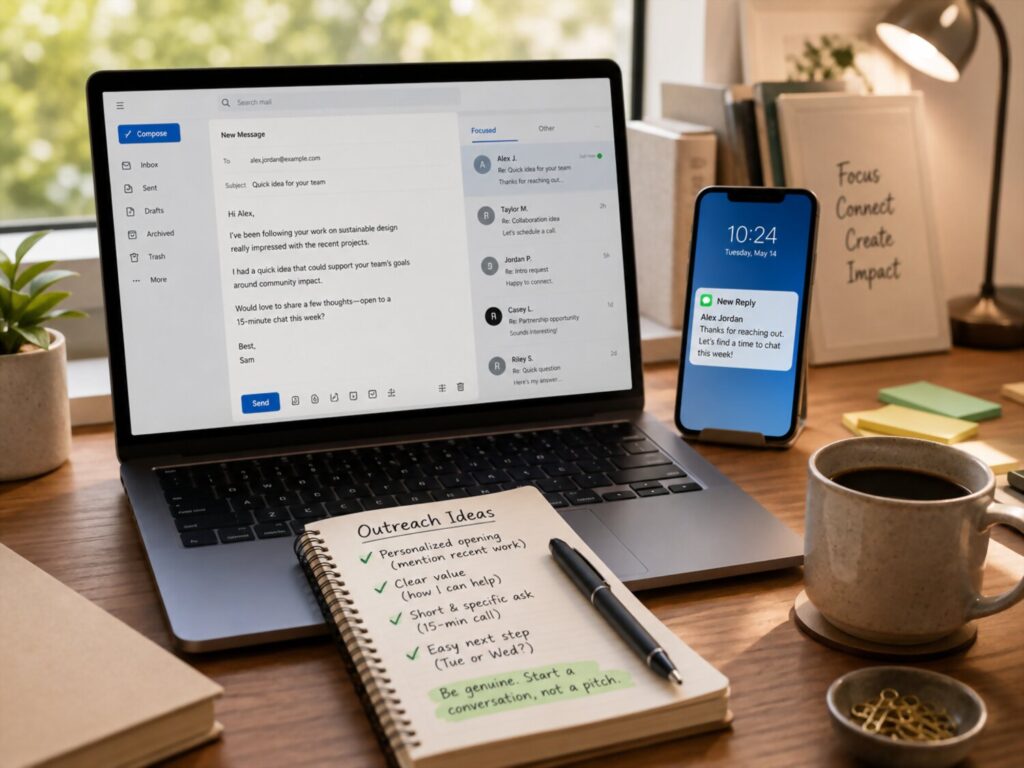
Outreach is one of the most useful networking skills for remote job seekers in tech, but it is also one of the easiest to get wrong. A message can open a career conversation, lead to a referral, or help you learn about a company before applying. It can also be ignored within seconds if it feels vague, demanding, or copied from a template.
Good outreach is not about clever wording. It is about relevance, respect, and timing. People are more likely to answer when they understand why you chose them, what you are asking for, and how little effort is required to respond.
For remote tech roles, written communication is part of the job. Your outreach message is often the first sample of how you communicate online. A clear message shows that you can write with context, ask focused questions, and respect another person’s attention.
Why Most Networking Messages Get Ignored
Many outreach messages fail because they focus only on the sender’s need. A stranger receives a message that says, “I am looking for a remote developer job. Can you refer me?” The problem is not that asking for help is wrong. The problem is that the message gives the recipient no context, no reason to trust the sender, and no easy way to respond.
People in tech receive many requests from job seekers, recruiters, vendors, students, and other professionals. A generic message blends into the noise. A specific message stands out because it feels intentional.
Strong outreach answers three questions quickly:
- Why are you contacting this person?
- What shared context or relevant reason connects you?
- What small, clear response are you asking for?
When your message answers these questions, it becomes easier to answer.
Start With Specific Context
Specificity is the foundation of effective networking outreach. Before writing to someone, identify why that person is relevant. Maybe they work at a remote first company you admire. Maybe they contributed to an open source project you use. Maybe they wrote about engineering culture, product strategy, data quality, security, design systems, or developer experience. Maybe they moved into the kind of role you want.
Mention that context naturally. Do not flatter excessively. Do not pretend to know more than you do. A simple, honest reference is enough.
For example, instead of writing, “I saw your profile and wanted to connect”, write, “I read your post about onboarding engineers across time zones, and your point about written project context stood out to me”.
That one sentence proves that your message was not mass sent. It also gives the other person something real to respond to.
Make the Ask Small and Clear
The best outreach messages usually ask for something modest. Busy professionals may not have time to review your resume, introduce you to a hiring manager, and explain the company’s hiring process in one message. They may be willing to answer one focused question.
A small ask might be:
- “What skill would you recommend strengthening before applying to this kind of remote backend role?”
- “Is there one thing your team values in remote engineering candidates that is not obvious from the job description?”
- “Would it be reasonable to apply if I have experience with similar tools but not the exact stack?”
- “Do you know whether this team hires outside your country?”
- “Is there a better person to follow for insight into this team’s work?”
These questions are easier to answer than a broad request like, “Can you help me get a job?” They also create a more natural conversation.
Do Not Open With a Referral Request
Referrals can be valuable, but asking for one too early can make the interaction feel transactional. A referral involves risk. The person may be putting their reputation behind your application. If they do not know your work, they may feel uncomfortable helping.
A better approach is to begin with context and learning. Ask about the role, the team, the company’s remote culture, or the skills that matter. If the conversation goes well and your background is relevant, a referral may come later. Sometimes the person will offer. Sometimes you can ask after you have shared enough evidence of fit.
For example, after a useful exchange, you might say, “I appreciate your insight. Based on what you shared, I think my background in API development and documentation is relevant to the role. Would you feel comfortable pointing me toward the best application path?”
This is more respectful than demanding a referral from the first message.
Use a Simple Outreach Formula
A strong message does not need to be long. In fact, shorter is usually better. The structure below works well for remote tech networking because it gives context without overwhelming the reader.
- Greeting with the person’s name
- One specific reason you are reaching out
- One sentence about your relevant background
- One clear question or request
- A polite close with no pressure
Here is an example:
Hi Maya, I read your post about async code reviews at distributed teams. I am a frontend developer moving toward remote roles, and I have been improving how I document component decisions in pull requests. I wondered if there is one communication habit your team values most when reviewing remote engineering candidates. Thanks for considering it.
This message works because it is specific, brief, relevant, and easy to answer.
Outreach Examples for Different People
Message to an Engineer
Hi Daniel, I noticed your team has written about improving reliability in a remote backend environment. I have been building small API projects with stronger logging and test coverage, and I am trying to understand what matters most in production focused backend roles. Is there one skill you think candidates often underestimate?
This kind of message respects the engineer’s expertise and asks for a focused opinion.
Message to a Hiring Manager
Hi Priya, I saw the remote product engineering role on your team and read the company’s recent article about reducing onboarding friction. My recent work has focused on documentation and internal tooling for developers. Before applying, I wanted to ask whether this role places more emphasis on feature delivery, platform quality, or developer experience.
This message shows preparation and connects the candidate’s background to the team’s needs.
Message to a Recruiter
Hi Alex, I saw that you recruit for remote data roles at companies building analytics products. I have experience with SQL, dashboard design, and stakeholder reporting, and I am targeting remote analyst roles where communication is central. Are there specific keywords or project examples you look for when screening candidates for these roles?
This gives the recruiter a clear way to respond and shows that the candidate understands screening realities.
Message to a Community Member
Hi Lena, your answer in the DevOps community about incident reviews was helpful. I am learning how remote teams document incidents without creating blame, and I liked your point about making action items measurable. Do you recommend any examples of strong incident review templates?
This message grows naturally out of community participation rather than a sudden job request.
Personalize Without Overwriting
Personalization matters, but it should not turn into a long essay. The recipient does not need your full career story in the first message. They need enough context to know why you are relevant and what you want.
A good outreach message is often between five and eight sentences. If the message is longer, the ask should be especially clear. If you need to share more background, link to a concise portfolio, GitHub profile, case study, or LinkedIn profile rather than pasting everything into the message.
Respect attention. A person is more likely to answer a message they can understand in under a minute.
Show Proof When It Helps
For remote tech job seekers, proof can make outreach stronger. If you mention a skill, include a simple way to verify it. This does not mean forcing a portfolio link into every message. It means adding evidence when it supports the conversation.
For example:
I recently wrote a short case study about how I redesigned a dashboard to make weekly reporting clearer. It relates to the kind of analytics work your team seems to do.
Or:
I have been contributing small documentation fixes to an open source project because I want to strengthen my async collaboration skills.
Proof works best when it is relevant to the person you are contacting. Random links feel promotional. Contextual proof feels useful.
Follow Up With Courtesy
Many good messages receive no response because people are busy, not because the message failed. A polite follow up is acceptable if the original message was thoughtful.
Wait several business days before following up. Keep the follow up brief. Do not guilt the person. Do not ask why they did not answer. Simply restate the context and make it easy to respond.
Example:
Hi Maya, I wanted to briefly follow up on my question about communication habits in remote engineering interviews. I know schedules get full, so no worries if now is not a good time. I appreciated your original post and thought your perspective would be useful.
This keeps the door open without pressure.
Avoid Common Outreach Mistakes
- Sending the same message to everyone
- Asking for a referral before building any trust
- Writing a message that is too long for a first contact
- Making the recipient do all the thinking
- Saying only “Can I pick your brain?”
- Using vague praise without specific context
- Hiding the real purpose of the message
- Following up too often
- Sounding entitled to someone’s time
- Forgetting to thank people after they respond
The best outreach feels professional and human. It makes the recipient feel chosen for a real reason, not targeted as part of a numbers game.
Turn Replies Into Real Conversations
When someone responds, do not immediately jump to a bigger ask. Answer with appreciation, reflect on what they said, and continue the conversation only if there is a natural reason.
If they give advice, tell them what you will do with it. If they share a resource, thank them after reviewing it. If they explain something about a company, use that insight to improve your application. If they cannot help, remain gracious.
Networking in a remote tech job search is built through many small moments of trust. A good outreach message starts that process by showing that you are prepared, respectful, and capable of communicating clearly in a digital workplace.
Turn One Conversation Into a Network Flywheel

A single networking conversation can be useful. A well handled conversation can become the start of a much larger opportunity network. For remote job seekers in tech, this distinction matters because the best remote roles often move through trusted relationships, quiet recommendations, community referrals, and repeated professional contact.
The goal is not to collect names. The goal is to create momentum. When one conversation leads to a second conversation, one useful insight leads to a better application, and one professional contact introduces another relevant person, your remote job search becomes less dependent on cold applications.
This is the network flywheel. Each respectful interaction creates energy for the next one.
Why One Conversation Is Rarely the Whole Opportunity
Many job seekers treat networking calls as isolated events. They ask for advice, say thank you, and move on. That approach can still be valuable, but it leaves a lot of opportunity unused.
In tech, people often know other people working on similar problems. A backend engineer may know a platform team hiring remotely. A product designer may know a startup looking for UX help. A data analyst may know a manager building a distributed analytics team. A recruiter may not have the right role today but may remember you when a better one opens later.
One conversation can reveal hiring signals, company culture, skill gaps, interview expectations, and hidden role requirements. It can also introduce you to people who are closer to the opportunity you want.
For remote tech job seekers, the smartest question is not only, “Can this person help me get a job?” It is also, “Can this conversation help me understand the market better and connect with the next right person?”
Enter Every Conversation With a Clear Purpose
A networking conversation should feel natural, but it should not be aimless. Before speaking with someone, know what you hope to learn. This makes the conversation more useful for both sides.
Your purpose might be to understand how a remote engineering team works, learn what a hiring manager values, ask about a specific role, get feedback on your portfolio, understand a company’s interview process, or learn which communities are worth joining.
A clear purpose helps you ask better questions. It also shows respect for the other person’s time.
For example, instead of opening with a broad question like, “Do you have any advice for me?” you might ask, “I am targeting remote frontend roles at product led companies. What communication habits do you think matter most for engineers working across time zones?”
That question is specific, relevant, and easy to answer. It also invites a more useful conversation.
Ask Questions That Create Next Steps
The best networking questions do more than collect information. They create movement. They help you identify skills to strengthen, companies to research, people to contact, and actions to take after the conversation.
Use questions that open useful paths:
- What skill would make someone more competitive for this type of remote tech role?
- What do candidates often misunderstand about working on a distributed team?
- Are there communities, newsletters, or events where people in this area share opportunities?
- Is there a type of project or portfolio example that would make my background easier to evaluate?
- Based on what I shared, is there a role title I should be searching for that I might be missing?
- Is there someone else whose perspective would be useful as I learn more about this area?
The final question is especially powerful when asked respectfully. It gives the person a chance to connect you with someone else without pressure. If they are comfortable, the conversation continues through the network. If not, you still leave with useful insight.
Turn Advice Into Visible Action
People are more likely to remember you when you act on their advice. This is one of the simplest ways to build trust in a remote job search.
If someone suggests improving your GitHub README, do it. If they recommend writing a short case study, publish one. If they suggest learning more about incident response, read a resource and apply it to a small project. If they mention that remote teams value async documentation, update your portfolio to show clearer project notes.
Then follow up with a brief message that shows what changed.
Example
“Thank you again for suggesting that I make my project decisions easier to scan. I updated the README with setup notes, tradeoffs, and a short section on what I would improve next. Your advice helped me make the project much clearer.”
This kind of follow up is effective because it is not asking for more help immediately. It shows that you listened, took action, and value the person’s time.
Keep Track Without Becoming Robotic
A network flywheel depends on memory. If you speak with many people during a remote tech job search, it is easy to forget who said what, when to follow up, and which companies or topics were mentioned.
Use a simple tracking system. It can be a spreadsheet, notes app, task tool, or private document. The format matters less than the habit.
Track these details:
- Person’s name
- Role and company
- Where you met them
- Main topics discussed
- Advice they gave
- Resources or companies they mentioned
- Any promised next step
- Date to follow up
- Personal detail worth remembering
- Whether you sent a thank you message
This is not about treating people like leads in a sales pipeline. It is about being thoughtful. Remembering details helps you communicate with care and avoid awkward, repetitive messages.
Follow Up Without Feeling Awkward
Many remote job seekers worry that follow up messages will feel annoying. They usually feel annoying only when they are too frequent, too demanding, or too vague.
A good follow up has a reason. It might share progress, thank the person again, send a useful resource, mention that you applied to a role they discussed, or ask one focused question after some time has passed.
Strong follow up messages are usually short. They remind the person of the context and offer something clear.
Useful follow up reasons include:
- You acted on their advice
- You found an article, tool, or resource related to your conversation
- You applied to a role they mentioned
- You completed a project they suggested
- You want to thank them after an interview
- You saw their team announce something relevant
- You are checking in after a reasonable gap with a specific update
A weak follow up says, “Just checking in”. A stronger follow up says, “I wanted to share a quick update since your advice helped me improve my portfolio.”
Make It Easy for People to Introduce You
When someone offers to introduce you to another person, make the process simple. Do not make them write your story from scratch. Give them a short introduction they can forward or adapt.
Your introduction should be concise and relevant. Mention who you are, what type of remote tech role you are targeting, and why the introduction makes sense.
Example
“Thanks for offering to introduce me. Here is a short note you can use if helpful: Jordan is a frontend developer focused on React, accessibility, and clear async documentation. They are looking for remote product engineering roles and recently shared a case study on improving component usability in a dashboard project.”
This makes the introduction easier and more accurate. It also increases the chance that the next person understands why you are worth speaking with.
Give Value Back to the Network
Networking should not only flow toward you. Even as a job seeker, you can offer value. You can share a useful article, recommend a tool, introduce two people with shared interests, give feedback on a post, answer a technical question, or support someone else’s work.
This matters because strong networks are built on mutual usefulness. You may not be able to offer a job lead today, but you can still be helpful, thoughtful, and generous.
In remote tech communities, small helpful actions are visible. People remember who contributes. They also remember who only appears when they need something.
Stay Connected After the Immediate Need Passes
The best professional networks last beyond a single job search. If someone helped you learn about remote engineering culture, reviewed your portfolio, introduced you to a recruiter, or explained a company’s hiring process, keep the relationship alive.
You do not need to message constantly. Occasional, meaningful contact is enough. Congratulate them on a launch. Share an update when their advice helped you. Comment thoughtfully on something they posted. Let them know when you accept a role. Thank them again if their guidance influenced your path.
This is how networking becomes sustainable. It stops being a short term tactic and becomes part of your professional life.
Use Each Conversation to Improve Your Search
Every networking conversation can teach you something about the remote tech market. You may learn that your target title is too narrow, your portfolio needs clearer business context, your resume does not show remote communication well enough, or your skills fit a different kind of role than you expected.
After each conversation, ask yourself:
- What did I learn that changes my job search?
- What should I update in my resume, profile, or portfolio?
- What company, role, or community should I research next?
- Who else might offer a useful perspective?
- What action should I take within the next few days?
This turns networking into a feedback loop. Instead of simply hoping for referrals, you use conversations to become a stronger candidate, a clearer communicator, and a more visible member of the remote tech community.
Remote Interview Networking: Keep Building Relationships During the Hiring Process
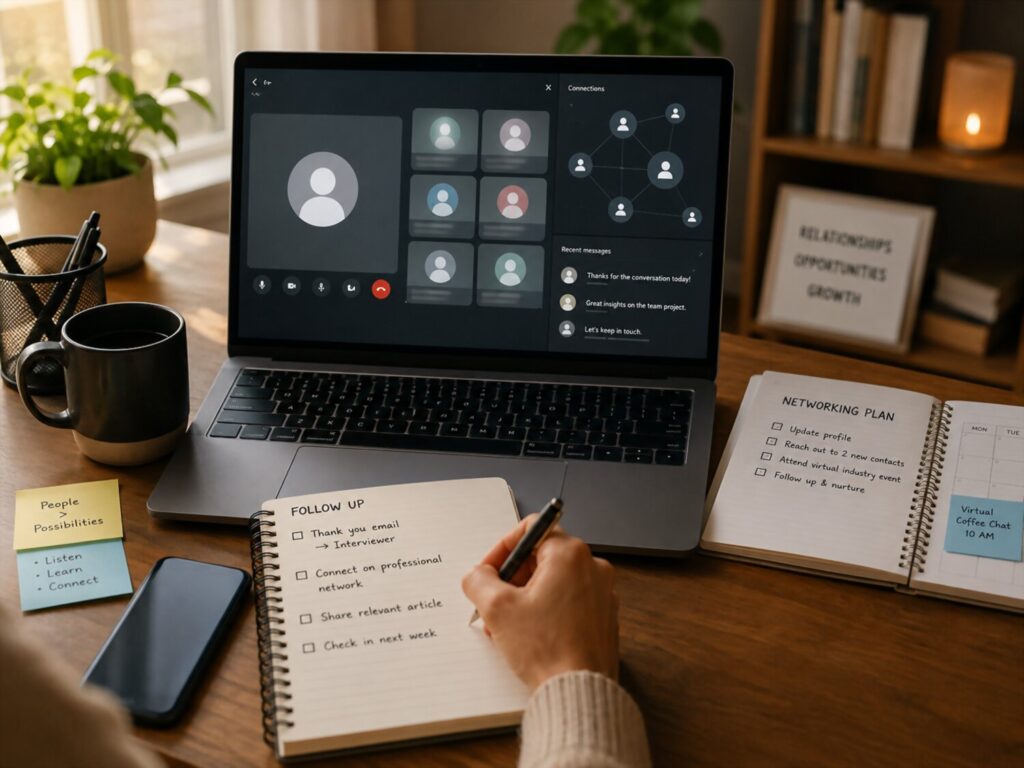
Many remote job seekers in tech treat networking as something that happens before they apply. Once the interview starts, they shift into performance mode and focus only on answering questions. That is a missed opportunity. The hiring process itself is a powerful networking environment, especially for remote roles where trust, communication, and collaboration style matter as much as technical ability.
Remote interviews are not only tests. They are conversations with recruiters, hiring managers, future teammates, and sometimes founders or department leaders. Each interaction gives you a chance to build professional credibility, learn how the company works, and leave a strong impression even if you do not receive an offer.
For remote tech candidates, interview networking means staying thoughtful, curious, and relationship focused from the first recruiter call to the final decision.
Treat Every Interviewer as a Future Professional Contact
In tech, people move between companies, recommend candidates, share opportunities, and remember strong conversations. An interviewer who cannot hire you today may think of you later for another team, another role, or another company.
This is why every interview should be handled as both an evaluation and a relationship. You still need to show your skills, but you also want to show that you are the kind of person remote teams enjoy working with. That means being prepared, clear, respectful, and responsive.
A remote interview can reveal how you communicate under pressure. Do you ask clarifying questions? Do you explain tradeoffs? Do you listen carefully? Do you follow up with useful context? These behaviors help people imagine working with you.
Use the Recruiter Call to Build Context
The first recruiter conversation is often seen as a screening step, but it can also help you understand the company’s remote hiring priorities. Recruiters usually know what the team is looking for, where candidates struggle, and what details matter most in the process.
Ask focused questions that help you prepare better and show professional interest.
- What qualities make someone successful in this remote role?
- How does the team usually communicate across time zones?
- What parts of the interview process should I prepare for most carefully?
- Is this role more focused on individual execution, cross functional collaboration, or both?
- What would make a candidate stand out beyond meeting the basic requirements?
These questions help you tailor your examples. They also show that you are thinking beyond getting hired. You are thinking about how to succeed after joining.
Connect With Potential Teammates Through Smart Questions
When you meet engineers, designers, product managers, data professionals, or team leads, avoid asking only surface level questions. Remote teams care about how people collaborate, document decisions, resolve confusion, and build trust without sharing an office.
Use the interview to understand the team’s working style. This helps you decide whether the role is right for you and gives the interviewer a stronger sense of your maturity.
Useful questions include:
- How does the team document technical or product decisions?
- What usually happens when people disagree on approach?
- How do new team members learn the codebase, product, systems, or customer context?
- What communication habits make someone effective on this team?
- How does the team balance meetings with focused work?
- What does a strong first month look like in this role?
- How are priorities shared when people work in different locations?
These questions are valuable because they focus on real remote work, not just perks or schedule flexibility.
Show Remote Collaboration Skills During the Interview
Remote employers often look for signs that a candidate can work with limited supervision. You can demonstrate this through the way you interview.
Explain your thinking clearly. When answering technical questions, describe your assumptions and decision process. When discussing past projects, include how you communicated with teammates, handled unclear requirements, documented work, or asked for feedback.
For example, instead of saying, “I built a dashboard for the team”, explain how you clarified stakeholder needs, shared progress, collected feedback, and documented the final workflow. This gives interviewers evidence that you can contribute in a distributed environment.
Remote collaboration is not only about using tools. It is about making work easier for other people to follow.
Use Follow Up Messages to Strengthen the Relationship
A thoughtful follow up message after an interview can reinforce your interest and communication style. It should not be generic. Mention something specific from the conversation and connect it to the value you could bring.
A strong follow up can do three things:
- Thank the interviewer for their time
- Reference a meaningful part of the discussion
- Add a brief point that supports your fit for the role
Example:
Thank you for speaking with me today. I appreciated learning how the team uses written project briefs to keep work clear across time zones. That matches the way I like to work, especially when technical decisions need context for future teammates. Our conversation made me even more interested in the role and the team’s approach to remote collaboration.
This type of message is professional, specific, and relationship focused.
Keep Networking Even if You Are Rejected
Rejection does not have to end the relationship. In remote tech hiring, a no can mean many things. The team may need a different skill level, another candidate may have more direct experience, the role may change, or hiring may pause.
If the process was respectful and you had good conversations, respond with maturity. Thank the people involved and ask whether it would be appropriate to stay connected. You can also ask for one piece of feedback if the company offers it, but do not pressure them.
A good rejection response might say:
Thank you for letting me know. I appreciated the chance to learn more about the team and enjoyed the conversations throughout the process. I understand the decision, and I would be glad to stay in touch if a future role is a closer match.
This keeps the door open. It also protects your reputation, which matters in the connected world of tech hiring.
Notice the Company’s Networking Signals Too
Interview networking is not only about impressing the company. It is also about learning whether the company is worth joining. A good remote interview process should give you insight into communication quality, role clarity, team culture, and respect for candidates.
Pay attention to how people interact with you. Are expectations clear? Do interviewers seem aligned on the role? Do they answer questions directly? Do they respect your time? Do they explain how remote collaboration actually works? Do they give you a realistic picture of the challenges?
These signals matter because the interview process often reflects the company’s internal habits. If communication is confusing during hiring, it may also be confusing after you join.
Build Relationships Without Overstepping
It is possible to network during interviews without becoming intrusive. The key is to respect boundaries. Do not message every interviewer repeatedly. Do not ask future teammates for inside information they should not share. Do not pressure people for personal referrals while the hiring process is active.
Instead, focus on thoughtful communication through appropriate channels. Send one clear thank you message. Ask relevant questions during interviews. Share additional material only when it genuinely supports the conversation. If someone offers to stay connected, accept graciously.
Professional restraint is part of trust. Remote teams need people who can communicate well without creating unnecessary noise.
Use the Interview to Expand Your Understanding of the Market
Each remote interview can teach you something useful, even when it does not lead to an offer. You may learn which skills are in demand, how companies describe role expectations, what remote teams struggle with, or which examples from your background resonate most.
After each interview, write down what you learned.
- Which questions did they ask repeatedly?
- Which parts of my experience seemed most relevant?
- Where did I struggle to explain my work clearly?
- What remote collaboration habits did the company value?
- What should I improve before the next interview?
- Which people from the process would be worth staying connected with?
This practice turns interviews into market research and relationship building. It helps you improve your positioning while building a broader professional network.
Leave a Strong Impression Beyond the Offer
The tech industry is smaller than it looks. People remember candidates who communicate clearly, prepare seriously, ask thoughtful questions, and handle outcomes with grace. A hiring process can become a long term professional connection, even when the immediate answer is no.
For remote job seekers in tech, this mindset is especially important. Distributed teams rely on written communication, trust, and reputation. Every interview message, question, and follow up gives you another chance to show those qualities in action.